
Traveling with a baby for the first time tends to come with a mix of excitement and low-grade dread, usually in roughly equal parts. The good news is that most of what makes baby travel hard is predictable, which means most of it can be planned around. Here’s practical, tested advice for flying and road trips, how to pack without overdoing it, and how to stay functional when — not if — something about the plan falls apart.
Flying With a Baby: Before, During, and After
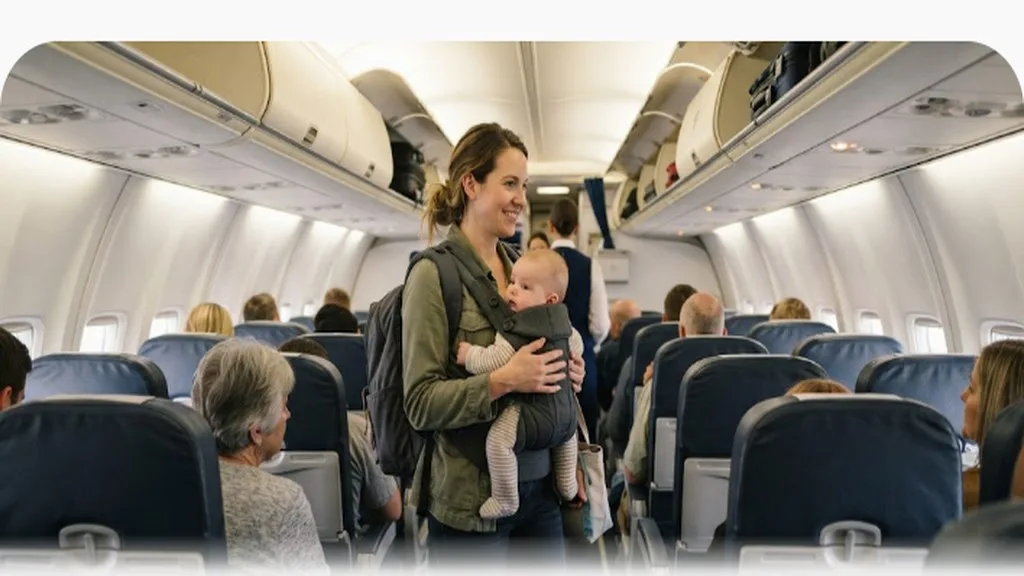
Booking matters more than most parents expect. Where possible, choose flight times around your baby’s temperament rather than convenience alone — some babies travel best during a nap window, others do better wide awake and entertained; a redeye that sounds appealing in theory can be rough if your baby fights sleep in unfamiliar environments. Bulkhead seats or a bassinet-eligible row, where available, buy meaningful extra space, though they’re worth requesting well in advance since they’re limited and popular.
At security, most countries allow breast milk, formula, and baby food in reasonable quantities beyond standard liquid limits, but it’s worth checking specific rules in advance and allowing extra time, since these items often get separately screened. Gate-check a stroller rather than checking it at the main counter whenever that option exists — it saves significant hauling through the airport and gets returned right at the aircraft door on arrival.
During takeoff and landing, offering a bottle, nursing, or a pacifier helps with the ear pressure changes that can be genuinely uncomfortable for a baby who can’t yet equalize pressure by swallowing or yawning on command the way adults learn to. A baby crying on a plane, despite how it feels in the moment, draws far less judgment from fellow passengers than most new parents fear — most people have either been there themselves or are simply sympathetic to the situation.
Road Trips: Timing and Pacing Matter Most
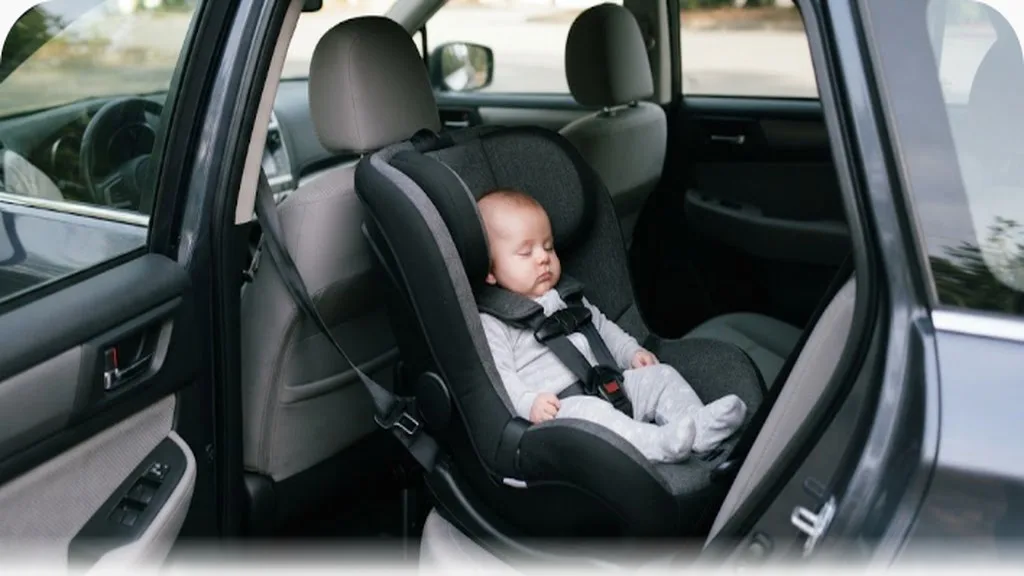
Car travel gives you more control than flying, which mostly means timing the trip around your baby’s natural schedule rather than adults’ convenience. Driving during a predictable nap window, or starting very early before a baby is fully awake, often results in a noticeably smoother stretch of highway than fighting against an awake, bored baby for hours.
Safety guidance is consistent regardless of trip length: a baby should remain in a correctly installed, rear-facing car seat for the entire drive, with no exceptions for a “quick” stretch of road, since crash risk doesn’t scale down just because the trip feels informal. Build in stops roughly every two hours for longer drives — not just for diaper changes and feeding, but because an extended stretch in a car seat without a break isn’t ideal for a baby’s developing spine and hips, a concern echoed in general car seat safety guidance.



A mirror positioned to let a front-seat passenger see the baby, a few rotating toys within reach, and a playlist or white noise option can meaningfully extend how long a baby tolerates being in the seat happily. Pacing expectations around your baby’s actual tolerance, rather than how far an adult could comfortably drive without stopping, tends to produce a far less stressful trip for everyone in the car.
Packing for Travel Without Overpacking
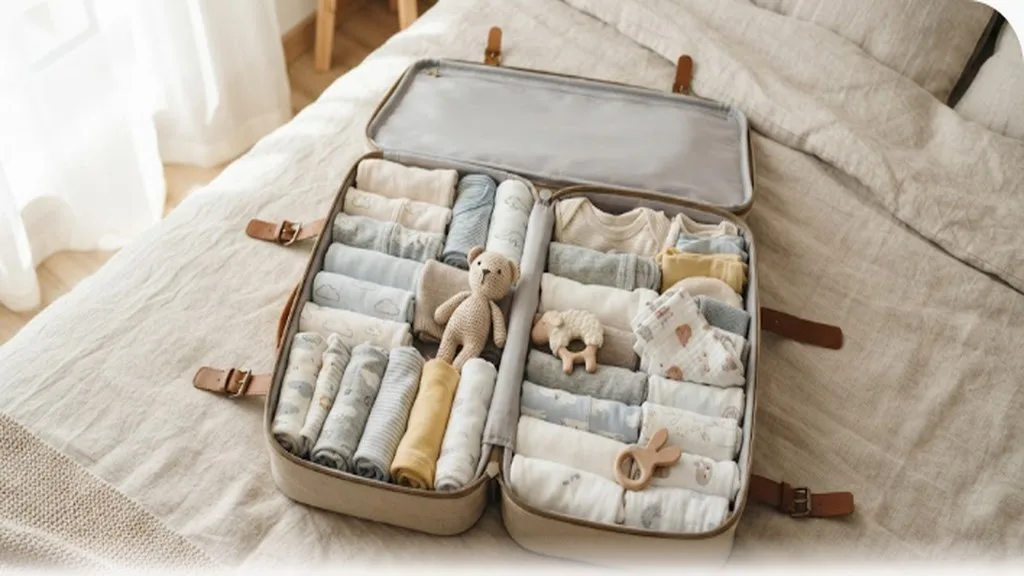
The instinct to pack for every conceivable scenario is strong but usually counterproductive — an overloaded bag is harder to dig through exactly when you need something quickly. A practical baseline: enough diapers and wipes for the travel day plus one extra day as a buffer (most destinations sell more once you arrive), two to three full outfit changes, a lightweight blanket, and whatever feeding setup your baby currently uses.
For longer trips, resist packing an entire separate nursery’s worth of gear. Many hotels and rental properties offer cribs or pack-and-plays on request, and a compact travel version is a reasonable purchase if you travel often; otherwise, renting or borrowing locally for a one-time trip often makes more sense than buying and hauling your own. A couple of familiar comfort items — a specific blanket, a favorite small toy — matter more for easing a baby into an unfamiliar sleep environment than almost any amount of extra gear.
When Plans Fall Apart: Staying Flexible

Something will not go according to plan — a delayed flight, a missed nap, a blowout at the worst possible moment, a meltdown in a restaurant. This isn’t a sign of poor planning; it’s simply what traveling with a baby involves, and going in expecting at least one real hiccup tends to make the actual hiccup far less rattling when it happens.
Building loose buffer time into transitions — leaving for the airport earlier than you think you need to, not scheduling back-to-back activities on the first day of a trip — absorbs a lot of the stress that unexpected delays would otherwise cause. And it’s worth deciding ahead of time, ideally with a travel partner, that a derailed plan is simply a new plan, not a failure: a missed activity, a changed itinerary, or an early return to the hotel because a baby has had enough is a completely normal part of traveling with a small person, not a sign the trip went wrong.

Hi everyone, i’m Eddy from Africa-Mozambique. I’m Passionate about thing and that’s why i started this blog- to share what i discover. Hope you like and support this project.