
Car seats are the one piece of baby gear that comes with a legal requirement attached, and also the one where the guidance keeps shifting as your child grows. This isn’t a comparison of specific models, since testing and reviewing individual seats isn’t something this kind of article can responsibly do. It’s a walk through how the stages actually work, what “rear-facing as long as possible” really means in practice, and the installation and secondhand-safety details that trip people up most often.
The four stages, and why they’re based on size, not age
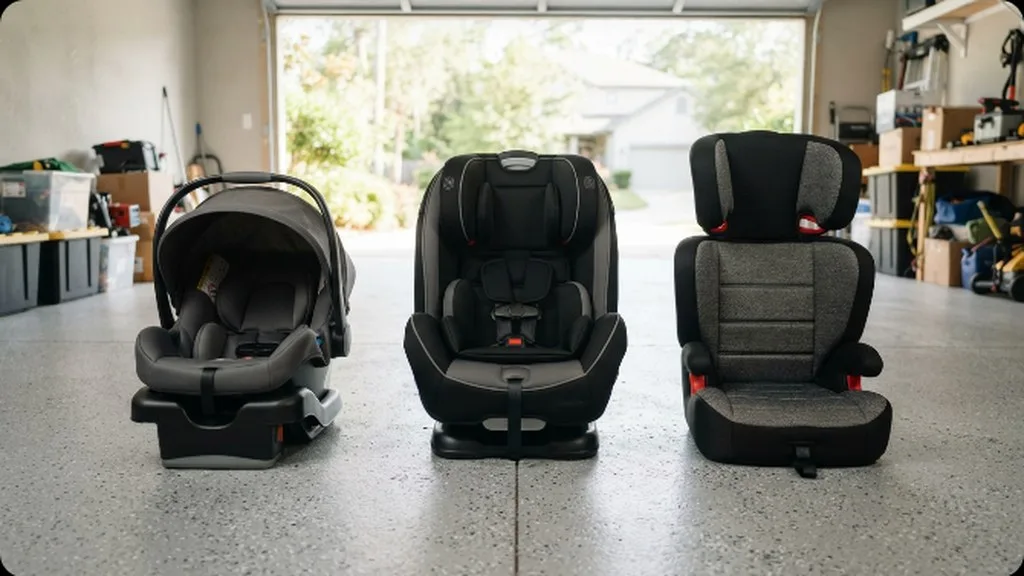
Car seat guidance from the American Academy of Pediatrics (AAP) and the National Highway Traffic Safety Administration (NHTSA) breaks down into four stages: rear-facing, forward-facing with a harness, belt-positioning booster, and eventually the vehicle’s own seat belt alone. It’s tempting to think of these as age brackets, but both organizations are consistent on this point: the transitions are based on your specific seat’s height and weight limits, not your child’s birthday. A seat’s manufacturer label will state the exact limits for that model, and that label overrides any general age guideline you’ve read elsewhere, including this one.
Rear-facing is the stage where the guidance is most specific: the AAP recommends keeping children rear-facing until they reach the highest weight or height allowed by their particular seat, not switching at any set age. Rear-facing-only infant seats typically top out between 22 and 35 pounds depending on the model, while convertible seats (ones designed to be used rear-facing and later forward-facing) often allow rear-facing use up to 40-50 pounds, which for many kids means staying rear-facing for two years or considerably longer. This isn’t about being overly cautious; rear-facing seats distribute crash forces across the back of the seat and a child’s whole body in a way that protects the head, neck, and spine more effectively than forward-facing harnesses do at younger ages.
Once a child outgrows the rear-facing limits of their specific seat, they move to forward-facing with a harness, and the same logic applies: both the AAP and NHTSA recommend staying in a forward-facing harness seat as long as the seat’s limits allow, generally to at least age 4, with some combination seats accommodating children up to 65 pounds forward-facing. After that, belt-positioning boosters take over, raising a child so the vehicle’s adult lap-and-shoulder belt sits across the stronger parts of their body (the upper thighs and chest, not the stomach and neck) rather than a smaller body. Kids typically move out of boosters and into the vehicle seat belt alone somewhere between ages 8 and 12, once they’re roughly 4 feet 9 inches tall and the adult belt fits properly without a booster: lap belt low across the upper thighs, shoulder belt crossing the chest and collarbone rather than the neck or face.
Installation is where most of the actual risk lives
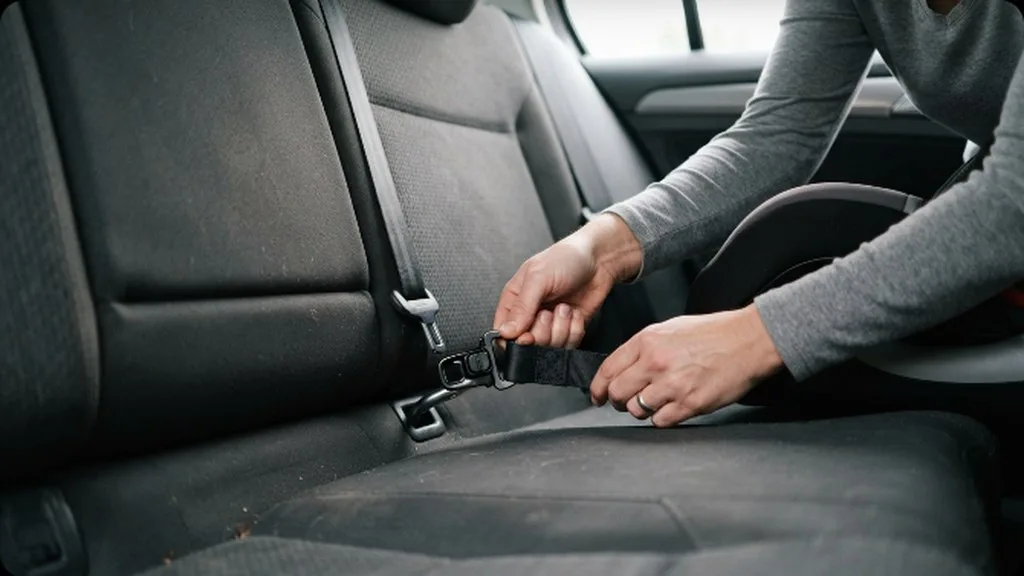
Buying the right seat matters less than most people expect compared to installing it correctly, and installation error is common enough that it’s worth taking seriously rather than assuming you’ve got it right. A car seat installs using either the vehicle’s lower anchor system (often called LATCH) or the vehicle’s seat belt, but not a combination of both unless the seat’s manual specifically says otherwise. Lower anchors have their own weight limits, typically the combined weight of the child and the seat needs to stay under a threshold set by your vehicle, often around 65 pounds total, after which point you generally need to switch to seat belt installation even if the car seat itself has a higher weight limit. For forward-facing seats, using the top tether (the strap that anchors to a point behind the seat, distinct from the lower anchors) makes a meaningful difference in limiting how far a child’s head moves forward in a crash, and it’s a step that’s easy to skip if you’re not looking for it.
Because installation errors are so common, both the AAP and NHTSA recommend a free installation check with a certified Child Passenger Safety Technician if one is available near you, through a fire station, hospital, or local health department. Finding a technician near you through NHTSA’s inspection station locator is worth doing before your due date rather than during the stress of getting ready for a hospital discharge. A properly installed seat shouldn’t move more than an inch side to side or front to back when you test it at the belt path, and the harness straps at the child’s shoulders should be snug enough that you can’t pinch any slack between your fingers.



Buying new versus secondhand: where the real risk is
A car seat is one of the few baby items where buying secondhand carries a genuine, well-documented risk rather than just being a matter of preference. Two issues come up specifically. First, car seats expire, generally somewhere between 6 and 10 years from the manufacture date depending on the model, because the plastic shell and components degrade over time in ways that aren’t always visible. The expiration date is printed directly on the seat, usually on a sticker on the bottom or side, and it’s worth checking on any seat before using it, new or not. Second, and more importantly, a seat’s crash history often isn’t knowable with a secondhand seat, and a seat that’s been in even a minor collision can have structural damage that isn’t visible to the eye but that compromises how it performs in a future crash. Unless you know a used seat’s complete history, including confirmation it’s never been in any collision, the safer choice is a new seat.
If you’re considering a hand-me-down from a close family member whose history with the seat you fully know, check it against the expiration date, confirm it hasn’t been recalled, and make sure all the original parts and labels are intact, since a missing manual or label can make it hard to install and use the seat correctly. It’s also worth registering any car seat, new or received as a hand-me-down, directly with the manufacturer, since that’s how you’d be notified of a recall. NHTSA’s recall database and the SaferCar app are both free ways to check a specific seat model for open recalls, and it’s worth a quick check periodically rather than assuming you’d hear about it otherwise.
Common mistakes worth knowing about ahead of time
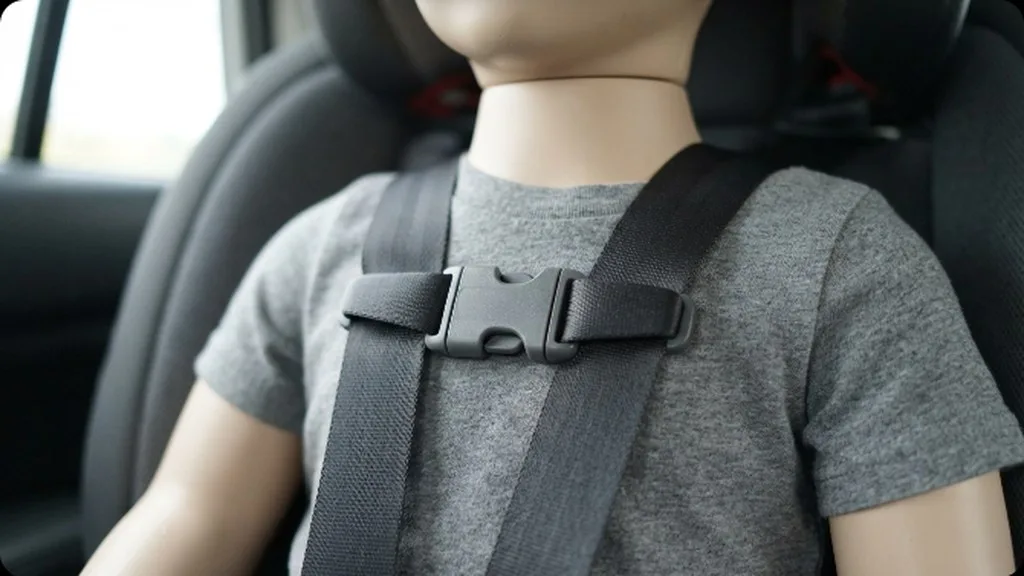
A few installation and use errors come up often enough that they’re worth naming directly. Harness straps that are too loose are probably the most common: the general test is that you shouldn’t be able to pinch any webbing slack at the shoulder once the harness is buckled and tightened. The chest clip, if the seat has one, should sit at armpit level, not down at the stomach, since its job is to keep the shoulder straps positioned correctly on the body. Bulky winter coats under the harness are a real problem because they compress in a crash, leaving the harness effectively too loose even though it looked snug when you buckled it; a blanket or coat placed over the buckled harness, rather than under it, solves the warmth problem without the safety issue. And angle matters for rear-facing seats, particularly for very young infants, since a seat installed too upright can allow a newborn’s head to flop forward and affect their airway; most seats have a built-in angle indicator or adjustable recline base specifically to help you get this right.
Rideshares, travel, and gear that isn’t the main seat
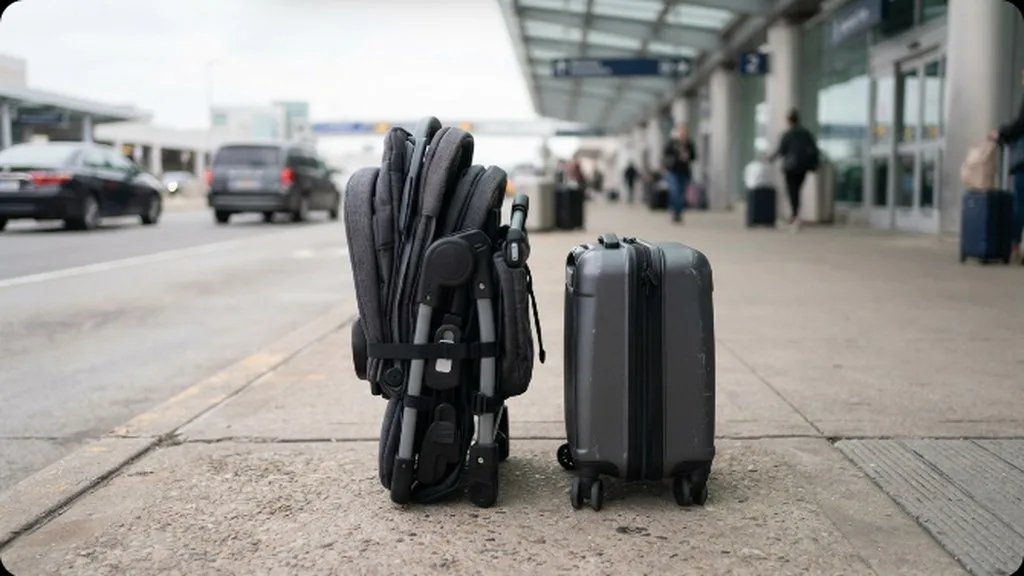
If you use rideshare services regularly, it’s worth thinking through your car seat plan before you need it, since most rideshare vehicles don’t come with one installed, and current guidance from the AAP is that children should still ride in an appropriate car seat during rideshare trips just as they would in a personal vehicle. Some parents keep a lightweight, travel-specific seat in a bag they can bring along; others avoid rideshare with a young child until they’re old enough for a simpler booster. Airplane travel has its own separate FAA guidance if you’re considering bringing a car seat onto a flight, and airport gate-checking a seat is generally discouraged if it will be used immediately at your destination, since checked baggage handling is rougher on a seat’s structure than most parents expect.
Seat protectors, mirror attachments to see a rear-facing baby, and aftermarket head support inserts are all worth a note of caution: products not specifically designed and tested for use with your particular seat model can interfere with how the harness or installation is meant to work, even when they seem harmless. If a product didn’t come with your seat and isn’t listed in your seat’s manual as compatible, it’s worth checking the manufacturer’s own guidance before adding it.
Country-specific notes worth knowing
Car seat law and specific size thresholds vary by country, so check your own country’s current requirements rather than assuming the US guidelines above apply exactly. In the UK, the law generally requires rear-facing seats for infants and sets specific requirements by height and weight, with some limited exceptions; the government’s official guidance is the clearest source for current specifics. Canada regulates car seats federally through Transport Canada, with requirements that differ somewhat from US standards, including different testing and labeling. Australia sets car seat requirements through the Australian Competition and Consumer Commission alongside state-based road rules, and Australian standards (an AS/NZS certification) differ from both US and European ones, so a seat purchased in one country may not be legal or appropriately certified in another. If you’re moving between countries or splitting time, it’s worth confirming a seat’s certification applies where you’ll actually be using it rather than assuming compatibility.
FAQ
When exactly should I switch my baby from rear-facing to forward-facing?
There’s no single age; it depends on when your specific seat’s rear-facing height or weight limit is reached, which is printed in the seat’s manual and often on the seat itself. Both the AAP and NHTSA recommend staying rear-facing as long as your seat allows rather than switching at a set age like one or two years.
Is it really unsafe to buy a used car seat?
It carries real risk unless you know its complete history. Crash damage isn’t always visible, and seats also expire based on manufacture date regardless of whether they’ve been in a collision. If you don’t have full confidence in a used seat’s history, a new one is the safer choice.
Do I need a different car seat for every stage, or can one seat cover multiple stages?
Both options exist. Convertible seats cover rear-facing and forward-facing stages in one seat, and all-in-one seats extend through booster use as well, while stage-specific seats (infant-only, for example) need to be replaced once outgrown. Neither approach is inherently safer; it’s a matter of budget and preference, as long as whichever seat you use is installed and used correctly for its current stage.
The bottom line
The specifics that actually affect safety are narrower than the sheer volume of car seat marketing suggests: keep your child in each stage (rear-facing, then forward-facing harness, then booster) as long as your specific seat’s limits allow rather than rushing to the next stage, get the installation checked by a certified technician if you can, buy new unless you fully trust a secondhand seat’s history, and check the expiration date and recall status before use. Everything else, cup holders, extra padding, specific brand reputation, matters far less than those fundamentals.

Hi everyone, i’m Eddy from Africa-Mozambique. I’m Passionate about thing and that’s why i started this blog- to share what i discover. Hope you like and support this project.