
There’s a particular kind of anxiety that comes with a milestone checklist: you read that babies are “supposed to” do something by a certain month, your baby hasn’t done it yet, and suddenly you’re refreshing search results at 11pm. Development doesn’t move in a straight line, and it doesn’t move at the same pace for every baby. Here’s what the first year actually looks like month by month, and how to use a milestone list without letting it run your life.
What a “milestone” actually means
The CDC and the American Academy of Pediatrics define a milestone as something most children, meaning about 75% or more, can do by a certain age. That threshold matters. It means a milestone list isn’t a pass/fail test given on a specific day; it’s a rough map of when most babies arrive somewhere, with plenty of babies arriving a few weeks or even a couple of months earlier or later and still being entirely typical. A baby who rolls over at 4 months and a baby who rolls over at 6 months are both within normal range.
Milestones also cluster into a few broad categories that show up in every checklist: social and emotional (how your baby connects with people), language and communication (sounds, understanding, eventually words), cognitive (how your baby thinks, explores, and solves little problems), and movement or physical development (head control, rolling, sitting, and so on). A baby can be ahead in one category and right on schedule or a bit behind in another, and that’s common rather than concerning.
2 months
Early milestones are mostly about connection and basic motor control rather than big physical feats. By 2 months, many babies calm down when picked up or spoken to, watch your face, and start to smile in response to you rather than just reflexively. On the sound side, babies this age often make small noises beyond crying and react to loud sounds. Physically, this is the age of lifting the head briefly during tummy time, moving both arms and legs, and occasionally opening the hands instead of keeping them curled into fists.
4 months
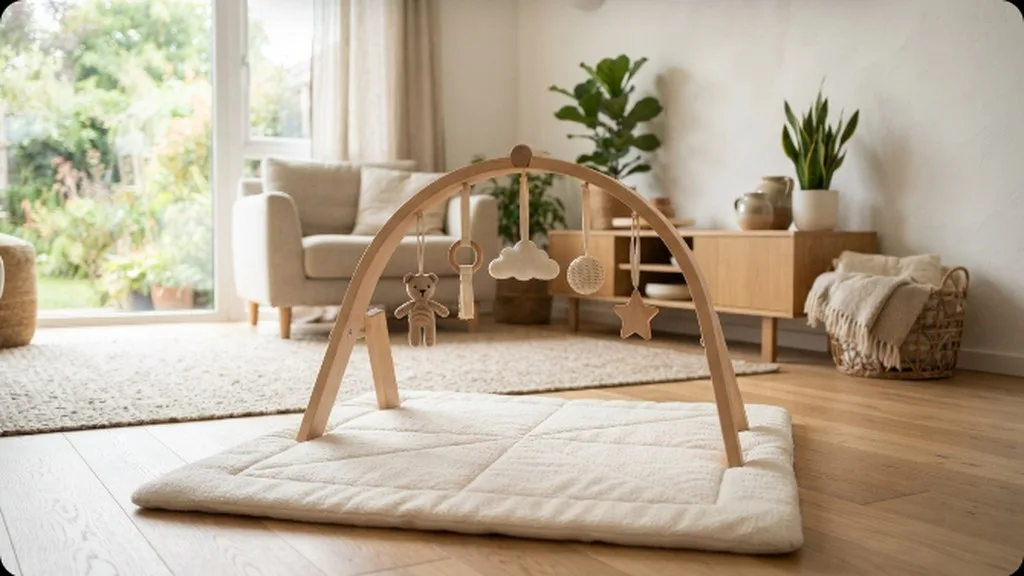
By 4 months, the social smile has usually become more deliberate: your baby may smile to get your attention rather than just in response to yours, and you might catch an early chuckle. Cooing sounds, the “ooo” and “aahh” that feel like the start of a conversation, tend to show up here, along with turning toward the sound of your voice. Physically, head control is steadier when your baby is upright, and tummy time often looks like pushing up onto forearms. Many babies will hold a toy briefly if you put it in their hand and swing an arm toward things that interest them.
6 months

Six months is often when things start to feel more interactive. Babies this age frequently recognize familiar people, enjoy a mirror, and laugh more freely. Vocally, this is a common window for the back-and-forth of “taking turns” making sounds with you, along with raspberries and squeals. Reaching for toys and exploring things by mouth is typical here, as is a baby who can push up onto hands while sitting or starting to roll from front to back. Rolling both ways, sitting without support, and other bigger motor skills often follow in the weeks after 6 months rather than exactly at 6 months.



9 months

By 9 months, personality often becomes more visible. Many babies show clear stranger wariness or clinginess around unfamiliar people, react when a parent leaves the room, and enjoy games like peekaboo. Babbling strings like “mamama” or “bababa” are common, even before those sounds are attached to meaning. This is also a common age for object permanence to show up in a practical way, like looking for a dropped spoon instead of ignoring it, and for banging two objects together. Physically, many babies can get into a sitting position on their own, sit without support, move objects between hands, and use a raking motion to grab small bits of food.
12 months
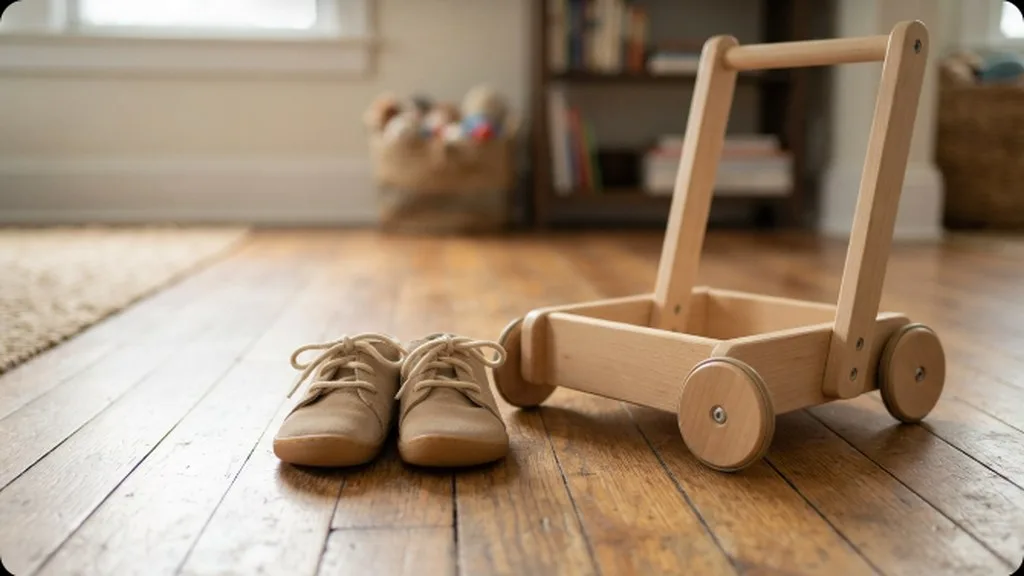
Around the first birthday, communication often takes a noticeable step forward. Waving bye-bye, responding to hearing their name or “no,” and calling a parent by a specific name like “mama” or “dada” are common markers. Cognitively, many babies this age will put something into a container, like a block in a cup, and look for a toy that’s been hidden under a blanket while they watched. Physically, this is a common window for pulling up to stand, walking while holding onto furniture, drinking from an open cup with help, and picking up small items using thumb and forefinger, sometimes called the pincer grasp.
It’s worth saying plainly: not every baby is walking, or even cruising along furniture, by 12 months, and that alone usually isn’t a red flag. Independent walking has a wide normal range that often extends well past the first birthday.
Why the range is so wide
A few things drive the spread in when babies hit these markers. Genetics plays a role, the way it does with height or when a baby grows in teeth. Premature babies are usually tracked against their adjusted age rather than their birth date, at least through the first couple of years, since a baby born 8 weeks early is developmentally closer to their due date than their birth date for quite a while. Opportunity and practice matter too. A baby who gets more supervised floor time and tummy time tends to build the strength behind rolling and sitting a bit earlier than a baby who spends more time in carriers, swings, or car seats, simply because of the practice involved, not because of anything wrong with either baby. And birth order can matter in small ways; some parents notice a second or third baby hits certain gross motor milestones a bit earlier just from watching and wanting to keep up with older siblings.
What actually matters more than exact timing
Pediatricians tend to care less about whether your baby hit a specific milestone in the “correct” month and more about a few bigger-picture things: whether your baby is generally progressing over time rather than staying stuck, whether they’re using both sides of their body fairly evenly, whether they’re engaging with people and their surroundings, and whether they’re not losing skills they once had. A baby who’s a little behind on one motor skill but clearly curious, responsive, and steadily adding new abilities over the following weeks is a very different picture than a baby who’s missing milestones across multiple categories or regressing.
Using a milestone checklist without it running your week
It’s easy for a checklist to turn into something you check daily, looking for reassurance that isn’t really there in a list format. A few things help keep it in perspective: remember the 75% threshold means a meaningful minority of typically developing babies haven’t hit any given milestone yet at the “expected” age. Look at trends over weeks rather than days; development happens in bursts, often with a quiet stretch followed by several new skills appearing close together. And use the checklist as a prompt for noticing and playing with your baby rather than as a test to administer. Most of what builds these skills, tummy time, talking to your baby throughout the day, giving them safe things to reach for and explore, happens naturally through ordinary care rather than structured practice sessions.
Country-specific notes worth knowing
The core developmental sequence, rolling before sitting before crawling before walking, is universal, but the tools used to track it differ by country. In the US, pediatricians typically use CDC/AAP milestone checklists at well-child visits. In the UK, most families track development using the Personal Child Health Record, widely known as the Red Book, given out shortly after birth and used by health visitors at routine checks. Canadian families may encounter tools like the Rourke Baby Record or provincial equivalents used by pediatricians and family doctors. In Australia, most states issue a personal health record commonly called the Blue Book, used at maternal and child health checks. The underlying milestones being tracked are broadly consistent across these systems, even though the paperwork and visit schedules differ somewhat.
When to bring it up with your pediatrician
Most milestone variation resolves itself with time and doesn’t need intervention. That said, it’s worth raising specific concerns rather than waiting them out if your baby has lost a skill they used to have, isn’t making eye contact or responding to sounds at all, shows a strong preference for one side of the body (like only reaching with one hand), isn’t sitting with support by around 9 months, or isn’t babbling or making a variety of sounds by around 12 months. Being born prematurely, a family history of developmental delays, or a difficult birth are also reasons your pediatrician may want to track things a bit more closely. Early intervention services exist specifically because catching a delay early tends to make more of a difference than waiting, so raising a concern earlier rather than later is generally the right instinct, and a good pediatrician won’t make you feel like you’re overreacting for asking.
FAQ
My baby was born early. Do I use their actual age or adjusted age for milestones?
Adjusted age (counted from your due date rather than birth date) is generally the more useful measure through at least the first two years for a baby born preterm. Most pediatricians will use adjusted age automatically when they talk to you about development.
Is it normal for a baby to be ahead in one area and behind in another?
Yes, this is extremely common. Uneven development across categories, like advanced language but average motor skills, or the reverse, is typical and doesn’t usually indicate a problem on its own.
Should I worry if my baby skips a stage, like going straight from sitting to standing without much crawling?
Not usually. Some babies crawl in unconventional styles, scoot on their bottom, or skip crawling largely in favor of pulling to stand. As long as your baby is generally mobile and progressing, the specific path there varies quite a bit.
The bottom line
Milestone lists are a useful rough guide, not a deadline your baby needs to meet. The 75% threshold behind these lists means a meaningful number of typically developing babies haven’t reached any given skill yet at the “expected” age, and genetics, birth timing, and simple practice all shift when a specific baby gets there. What matters more than hitting an exact month is steady progress over time, engagement with people and surroundings, and using both sides of the body evenly. When something feels off, bringing it up with your pediatrician early is almost always the right call, even if it turns out to be nothing.

Hi everyone, i’m Eddy from Africa-Mozambique. I’m Passionate about thing and that’s why i started this blog- to share what i discover. Hope you like and support this project.