
Long before a baby can tell you what they want, their hands are already doing a remarkable amount of work. Fine motor development — the gradual shift from reflexive grasping to deliberate, precise hand control — follows a surprisingly predictable path, and watching it unfold is one of the quieter joys of the first year. Here’s how a baby’s grasp actually develops, stage by stage, from the automatic newborn reflex to the pincer grip that eventually lets them pick up a single Cheerio with calm, surgical precision.
The Newborn Reflex Grasp
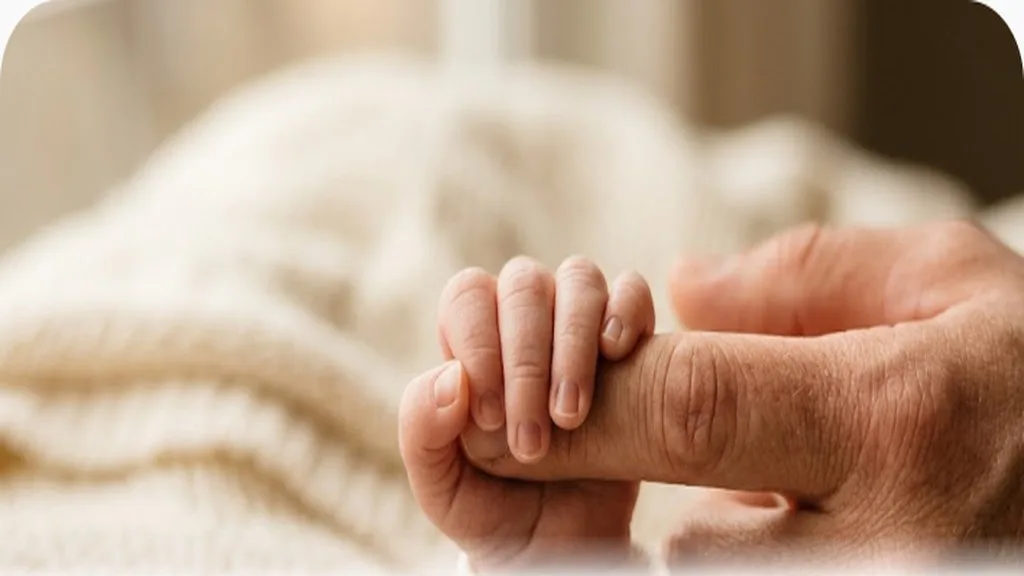
If you’ve ever placed a finger in a newborn’s palm and felt their whole hand clamp down around it, you’ve seen the palmar grasp reflex in action. This isn’t a choice your baby is making — it’s an automatic, involuntary reflex present from birth, triggered by pressure on the palm. It’s strong enough that newborns can sometimes support a surprising amount of their own weight gripping an adult finger, though that’s more a fun party trick than something to actually rely on.
This reflex typically fades by around three to four months as voluntary motor control starts to take over from automatic reflexes. That transition is actually a developmental milestone in itself: the disappearance of the reflex grasp is one of the early signs that your baby’s brain is shifting from reflex-driven movement to intentional, controlled movement — the foundation everything else in fine motor development is built on.
The Palmar Grasp: Scooping With the Whole Hand
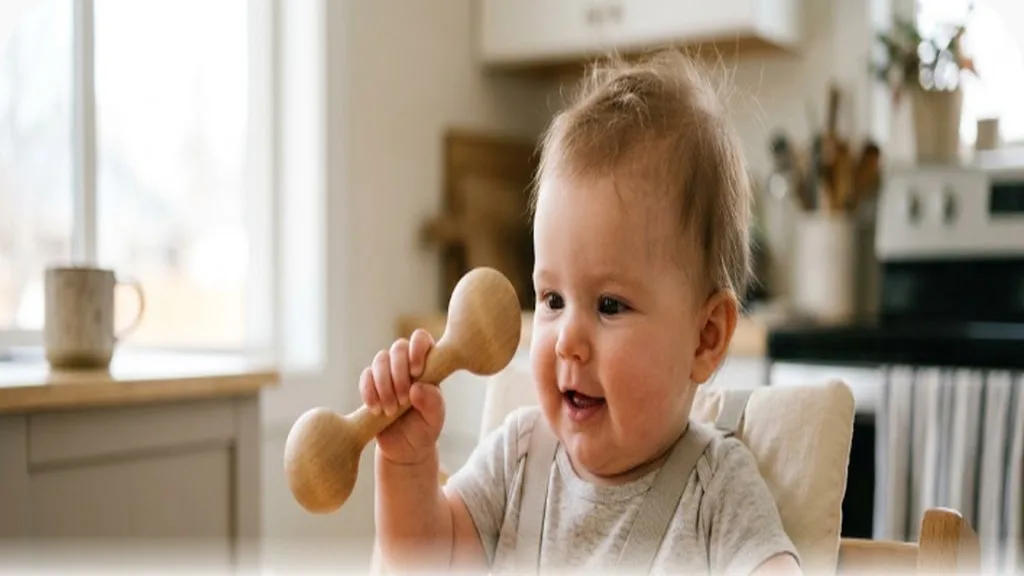
Around four to six months, once the reflex grasp fades, babies begin to intentionally reach for and grab objects using their whole hand, raking small items toward their palm rather than picking them up with their fingers. This voluntary palmar grasp is clumsy by adult standards — objects often get knocked away before they’re successfully grabbed — but it represents real, deliberate motor planning: seeing an object, deciding to reach for it, and coordinating the arm and hand to make contact.
During this stage, babies will transfer objects from one hand to the other, bring things to their mouth constantly (a completely normal way of exploring texture and shape, not just a feeding instinct), and bang objects together once sitting becomes stable enough to free up both hands at once. Toys that are easy to grab with a whole-hand grip — rings, soft blocks, rattles with a thick handle — tend to get the most use at this stage, since smaller or thinner objects are still genuinely hard to manage.
The Pincer Grasp: A Major Turning Point
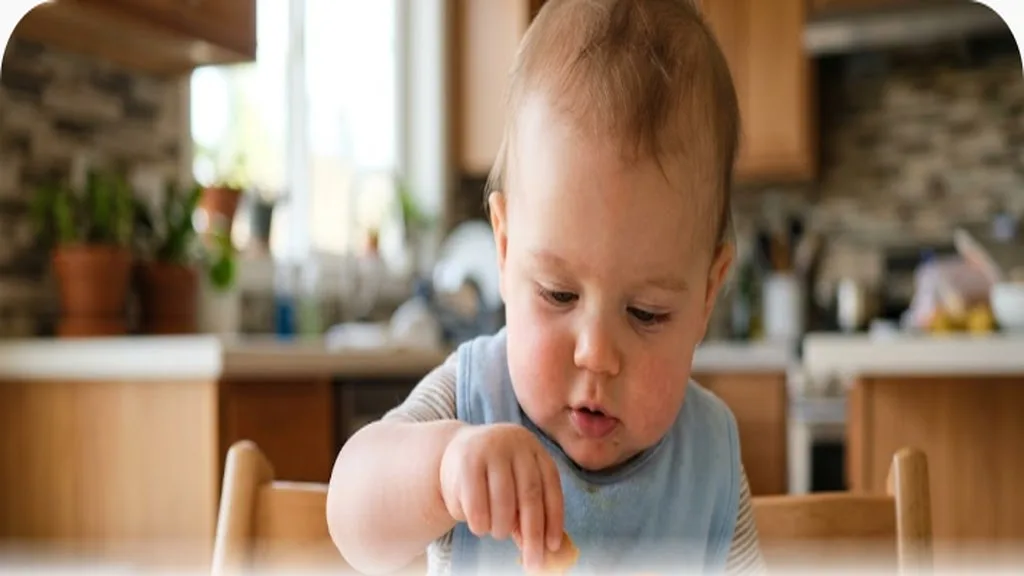
Somewhere between eight and twelve months, most babies develop the pincer grasp — picking up small objects using the thumb and index finger instead of the whole hand. This usually starts as an inferior or “crude” pincer grasp, using the side of the thumb against the finger, and matures into a precise, fingertip-to-fingertip grip by around twelve months.



This is a genuinely big deal developmentally, and not just for picking up food (though the transition to solids is exactly when this skill gets its biggest real-world workout). The pincer grasp requires precise coordination between vision and small hand muscles, and it’s considered one of the clearest markers of healthy fine motor progress at this age. It’s also closely linked to hand-eye coordination more broadly — the same control that later lets a toddler stack blocks, turn pages, and eventually hold a crayon.
Once the pincer grasp is reliable, you’ll likely notice your baby becoming almost obsessive about picking up tiny things — crumbs, lint, a stray thread on the carpet — purely because they finally can. This is a good moment for a renewed sweep of the floor for choking hazards, since the same new skill that lets them pick up a pea also lets them pick up a button battery or a small toy part.
Simple Activities That Build Hand Control
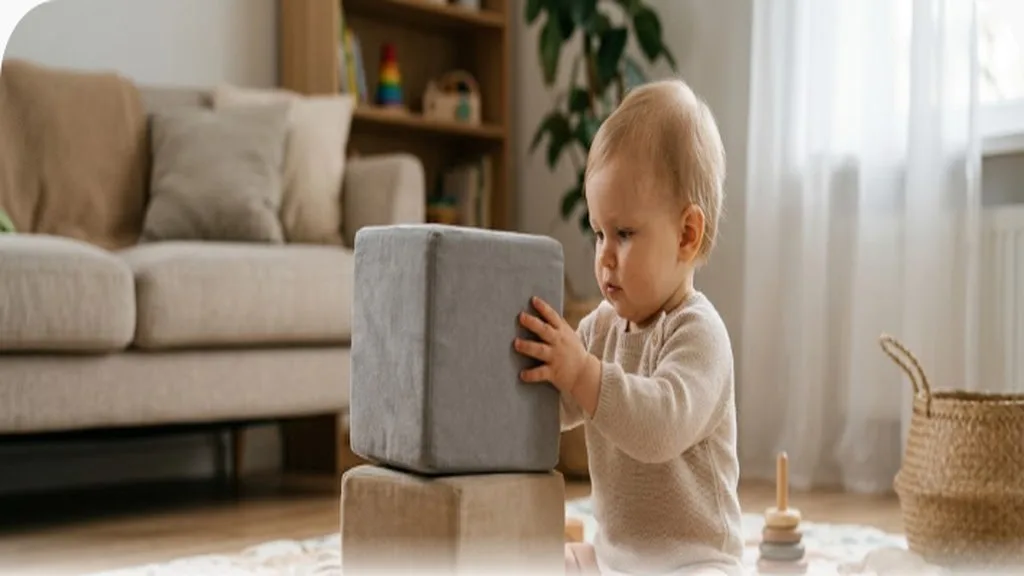
Fine motor skills develop mostly through repetition and open-ended play, not structured exercises, but a few simple setups reliably give babies useful practice. Offering safe finger foods once solids have started is one of the best real-world opportunities, since self-feeding naturally pushes the grasp from whole-hand toward pincer as pieces get smaller.
Toys with buttons, textures, and moving parts encourage index-finger isolation, which is a separate skill from grasping and matters for later tasks like pointing and eventually typing or writing. Stacking cups or large soft blocks build the hand-eye coordination needed to place an object precisely rather than just grab it. And simple container play — dropping small (but not small-enough-to-swallow) objects into a container and dumping them back out — is a favorite for a reason: it combines grasp, release, and spatial reasoning all in one repetitive, satisfying loop.
As with most physical milestones, there’s a wide normal range here, and a baby who’s a few weeks behind this general timeline in an otherwise typically developing pattern usually just needs a bit more time and practice. If a baby shows no interest in reaching for objects by six months, isn’t transferring objects between hands by nine months, or shows no attempt at a pincer grasp by fourteen months, that’s worth mentioning at a well visit — but for most babies, this is simply a skill that clicks into place with time, repetition, and a steady supply of small, mildly inconvenient things to try to pick up off the floor.

Hi everyone, i’m Eddy from Africa-Mozambique. I’m Passionate about thing and that’s why i started this blog- to share what i discover. Hope you like and support this project.