
Somewhere in the second half of the first year, most babies start plotting their escape from staying put. The path from lying on a blanket to walking across the living room isn’t a straight line, and it doesn’t look the same for every baby — some crawl for months before standing, some skip crawling almost entirely, and some seem to go from sitting to full sprinting in what feels like a single weekend. Here’s a realistic timeline for the major gross motor milestones, what’s actually happening in each stage, and how to support safe movement without hovering over every wobble.
The Gross Motor Timeline: What Happens and When
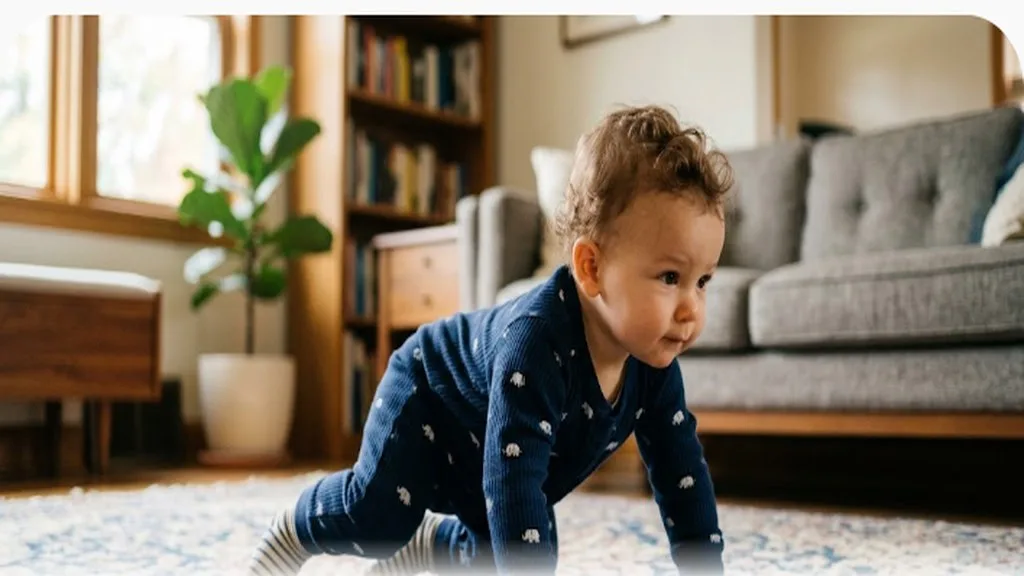
Gross motor development follows a rough head-to-toe, center-out progression: babies gain control of their head and neck first, then their trunk, then their arms and legs. That’s why tummy time in the early months matters so much — it’s building the neck, shoulder, and core strength that everything else depends on.
Rolling typically starts around four to six months. Sitting without support generally arrives between six and eight months. Crawling, in whatever form it takes, usually shows up between seven and ten months. Pulling to stand tends to follow closely, often eight to ten months. Cruising along furniture comes next, generally nine to twelve months, and independent walking, on average, lands somewhere between eleven and fifteen months — though anywhere up to eighteen months without walking is still considered within the typical range if other movement skills are progressing.
The most important thing to understand about this timeline is that it’s a range, not a schedule, and skills don’t have to arrive in a fixed order. Some babies walk without ever crawling in a traditional hands-and-knees pattern. Some sit late but crawl early. What matters more than hitting an exact month is that your baby is steadily gaining new movement skills over time, even if the order looks a little unconventional.
Crawling: Not Every Baby Does It the Same Way
Classic hands-and-knees crawling is common, but it’s far from the only version. Some babies commando-crawl on their bellies for weeks before ever lifting onto their hands and knees. Others “bear crawl” with straight arms and legs. A fair number of babies bottom-scoot, pulling themselves along in a seated position using one or both legs, and never do a traditional crawl at all before moving on to standing and walking.
All of these count as crawling in the developmental sense, because the point of the stage isn’t the specific pattern — it’s building coordination between opposite sides of the body, strengthening the shoulders and hips for weight-bearing, and giving your baby a reliable way to get somewhere on their own. If your baby has found a method that gets them across the room, even an unconventional one, that’s a working solution and generally not something to correct.



A small number of babies skip crawling altogether and move from sitting directly to pulling up and cruising. This is usually fine on its own, especially if your baby had plenty of tummy time and floor play earlier on. It’s worth mentioning if it comes up at a well visit, mostly so your pediatrician has the full picture, but it isn’t automatically a red flag in an otherwise typically developing baby.
Cruising and Pulling to Stand
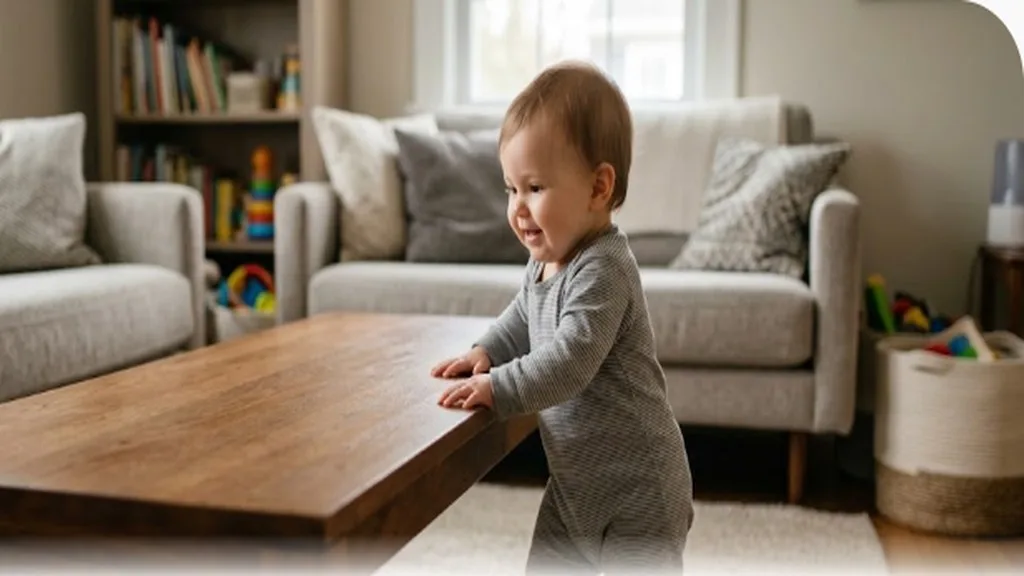
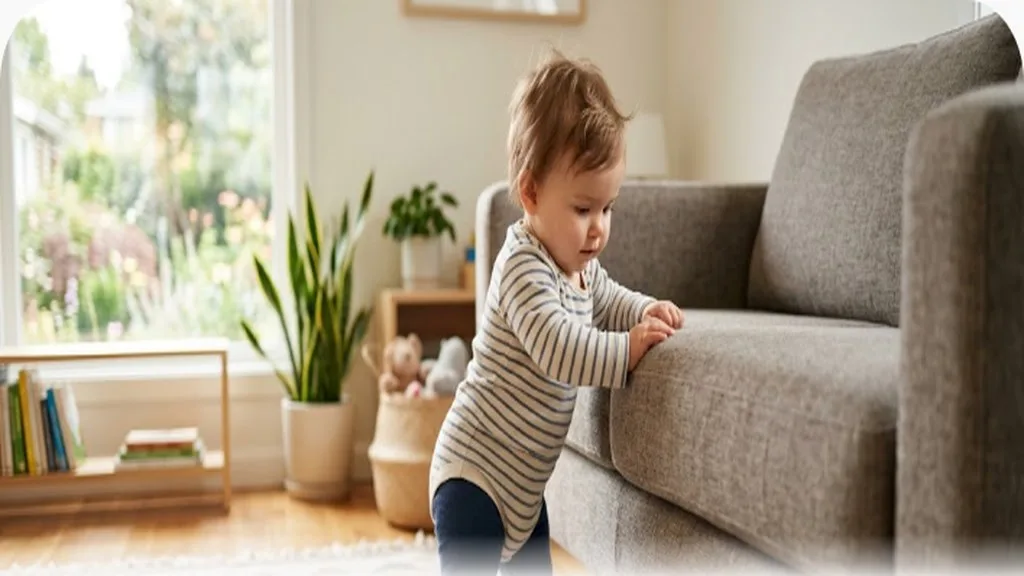
Pulling to stand usually starts with a lot of trial and error — a baby hauls themselves up on the edge of the couch, stands there triumphantly for a few seconds, and then realizes they have no idea how to get back down, which is frequently followed by a thump and some tears. This is a completely normal part of the process. Bending the knees to lower back down is its own skill that takes practice separate from the standing itself.
Cruising — sidestepping while holding onto furniture — typically follows once standing feels more stable. Babies will often cruise along a couch, grab a nearby table, and bridge the gap between the two pieces of furniture before they’re confident enough to let go completely. This “furniture surfing” stage can last anywhere from a few weeks to a couple of months and is a good sign that independent steps aren’t far off.
During this stage, it’s worth doing a quick safety pass on your main living space: anchor any furniture your baby is likely to pull up on if it could tip, remove low glass or sharp-edged pieces from cruising paths, and double check that cords from blinds or lamps aren’t reachable from a standing height. Babies at this stage are testing their new standing ability on literally everything within reach.
First Steps: Helping Without Rushing

The jump from cruising to independent steps often starts with a baby letting go of furniture for a second or two without quite meaning to, followed by a quick drop to the floor. Real first steps tend to build gradually from there: one step, then a couple, then a shaky little walk across an open space toward an outstretched set of hands.
You can encourage this without pressuring it. Holding your baby’s hands for supported walking is fine, but letting them practice balance on their own — even just standing unsupported for a few seconds at a time — matters more for building the confidence to let go. Barefoot practice on a flat, non-slippery surface is often easier for new walkers than shoes, since bare feet give more direct feedback about balance. Push toys and sturdy furniture to cruise along are more useful at this stage than walking “helpers” like baby walkers on wheels, which some safety organizations actually discourage because of fall and stair-related injury risks.
Falls are part of this process, not a sign something’s wrong. New walkers fall constantly, on soft floors, from a low height, and almost always bounce back with nothing more than mild annoyance. Resist the urge to gasp or rush over for every wobble — a calm, low-key reaction teaches your baby that falling is a normal, unremarkable part of learning to walk, which tends to build more confidence than an anxious one.
If your baby isn’t crawling in some form by ten months, isn’t pulling to stand by twelve months, or isn’t walking at all by eighteen months, that’s a reasonable thing to raise with your pediatrician, especially alongside any other developmental concerns. On its own, a slightly later walker with strong skills in every other area is usually just a slightly later walker — gross motor timing varies a lot between individual kids, and where your baby lands on that range says very little about anything beyond, well, when they started walking.

Hi everyone, i’m Eddy from Africa-Mozambique. I’m Passionate about thing and that’s why i started this blog- to share what i discover. Hope you like and support this project.