
Somewhere between the first blurry coo and a toddler demanding “more juice” at full volume, a huge amount of development happens that’s easy to miss day to day. Language is one of the clearest windows into how a baby’s brain is growing, and it’s also one of the milestones parents worry about most, because the range of “normal” is genuinely wide. One baby says a clear “mama” at ten months; another doesn’t say a recognizable word until closer to fifteen, and both can be completely typical. Here’s what language development actually looks like month by month, what you can do to support it without turning playtime into a flashcard drill, and when a conversation with your pediatrician is worth having.
How Language Develops Before the First Word
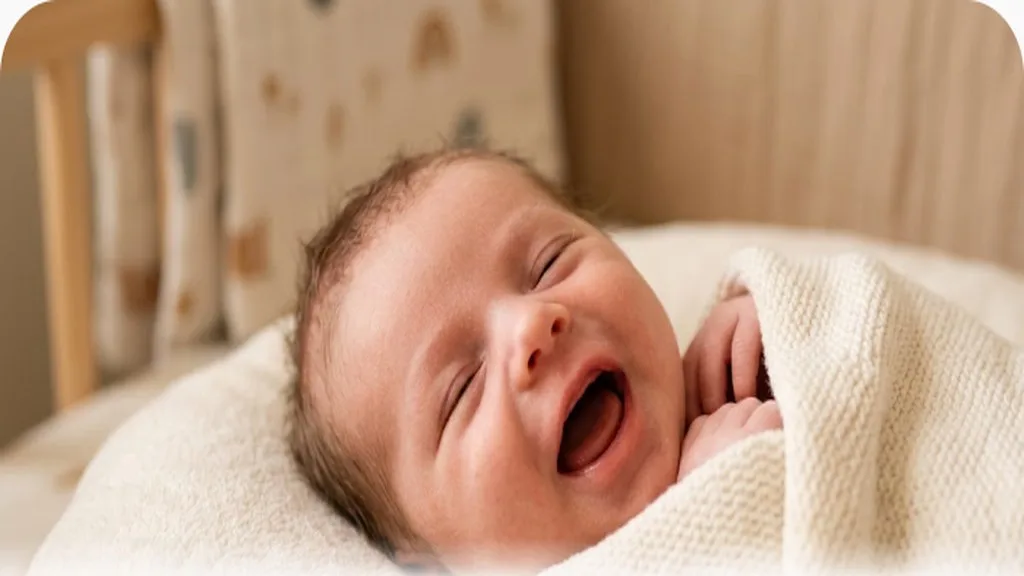
Spoken words are the finish line, not the starting point. Language development begins in the first weeks of life, long before anything resembling a word shows up, and most of that early work is happening in listening and social connection rather than talking.
In the first two months, babies are already tuning in to the rhythm and pitch of speech, especially a caregiver’s voice, and they’ll often startle or quiet in response to sound. Around two to four months, true cooing starts: long, musical vowel sounds like “ahh” and “ooh,” often made during calm, alert stretches when your baby is looking at your face. This is also when real back-and-forth starts to appear, where your baby coos, you respond, and they coo again, almost like a slow-motion conversation.
By four to six months, cooing gives way to babbling, including the first consonant sounds. “Bababa,” “gaga,” and similar strings are hugely common. This stage matters more than it sounds like it should, because babbling is essentially practice: your baby is testing out the physical mechanics of making speech sounds with their lips, tongue, and breath, the same muscles that will eventually form real words.
Between six and nine months, babbling usually becomes more complex and more speech-like, often described as “jargon” — strings of sound with the rising and falling intonation of real sentences, even though none of the individual sounds are actual words yet. Some babies also start repeating syllables in a more deliberate way, like “dadada” or “mamama,” which can sound like a word before it’s actually attached to meaning. It’s worth noting that “dada” said as babbling practice and “Dada” said specifically to or about a parent are different milestones, even though they sound identical.
First Words: What to Expect and When
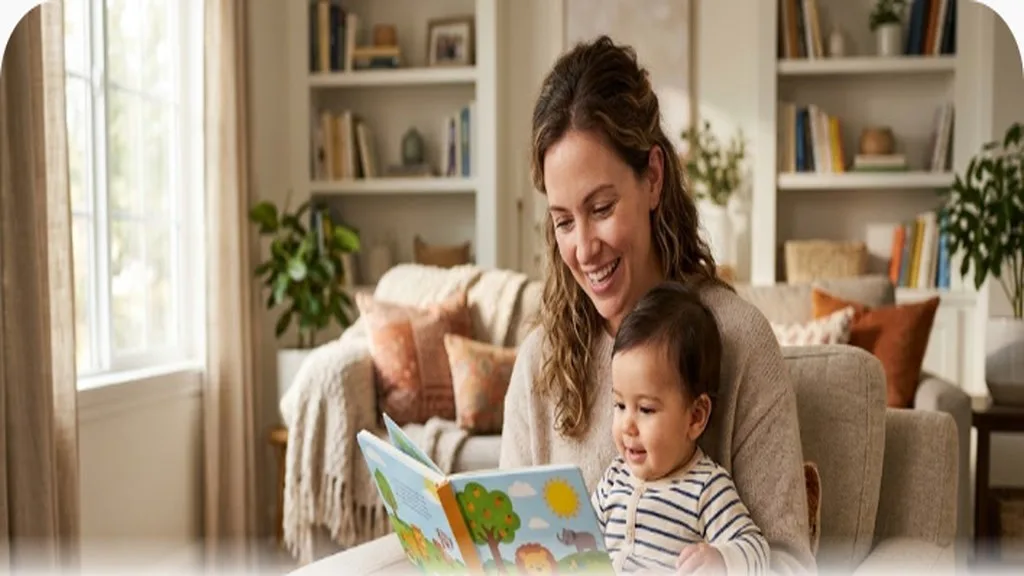
Most babies say a first recognizable word somewhere between ten and fourteen months, though anywhere from nine to sixteen months is well within typical range. A “word” at this stage doesn’t need to be pronounced perfectly. If your baby consistently says “ba” to mean “bottle” or “nana” to mean “banana,” and they use that sound the same way every time to refer to the same thing, that counts as a real word, even if it wouldn’t pass a spelling test.



The first handful of words tend to cluster around a few predictable categories: important people (“mama,” “dada”), favorite foods or objects (“milk,” “ball”), and useful social words (“no,” “bye-bye,” “uh-oh”). Animal sounds often slip in early too, since “woof” or “moo” are fun, easy to say, and get a big reaction from everyone in the room.
After the first word or two, vocabulary growth is often slow and a little unpredictable for a few months — this is completely normal and not a sign anything is wrong. Most babies have somewhere between one and three words by twelve months, climbing to roughly ten to twenty words by fifteen months. Then, often between eighteen and twenty-four months, many toddlers go through what’s sometimes called a vocabulary explosion, where new words seem to appear daily and two-word combinations (“more milk,” “mama up”) start showing up. This isn’t universal, and a slower, steadier climb is just as healthy.
It helps to remember that understanding almost always runs ahead of speaking. A baby who says zero words at twelve months but clearly understands “no,” turns to look when you say the dog’s name, and follows a simple instruction like “give it to Daddy” is showing strong language development, even without spoken vocabulary to prove it yet.
Everyday Ways to Support Language Growth
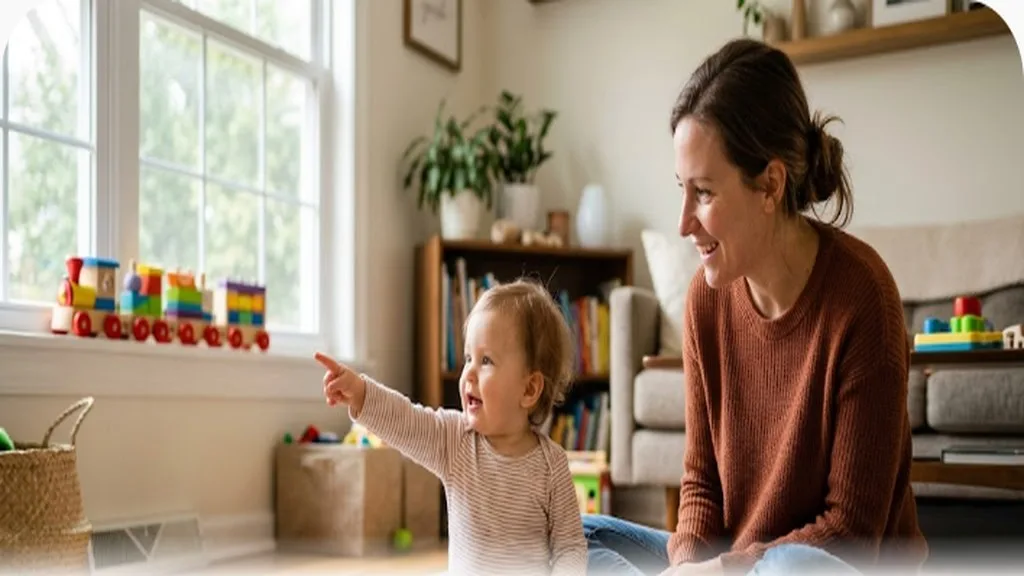
You don’t need flashcards, apps, or a curriculum. The single most effective thing you can do is talk to your baby constantly, about completely ordinary things, in normal (if slightly exaggerated and sing-songy) language. Narrate what you’re doing while you change a diaper, describe what you see on a walk, or talk through what’s happening at bath time. Babies absorb an enormous amount of vocabulary just from being talked to as if they’re already part of the conversation, well before they can answer back.
Reading together, even for a few minutes a day from very early on, is one of the best-supported habits for language growth. It doesn’t matter if your baby chews the corner of the book or crawls away halfway through; what matters is the repeated exposure to rhythm, new words, and your voice. Point at pictures and name them slowly. Let your baby turn pages, even clumsily. Simple board books with one clear image per page tend to hold attention best in the first year.
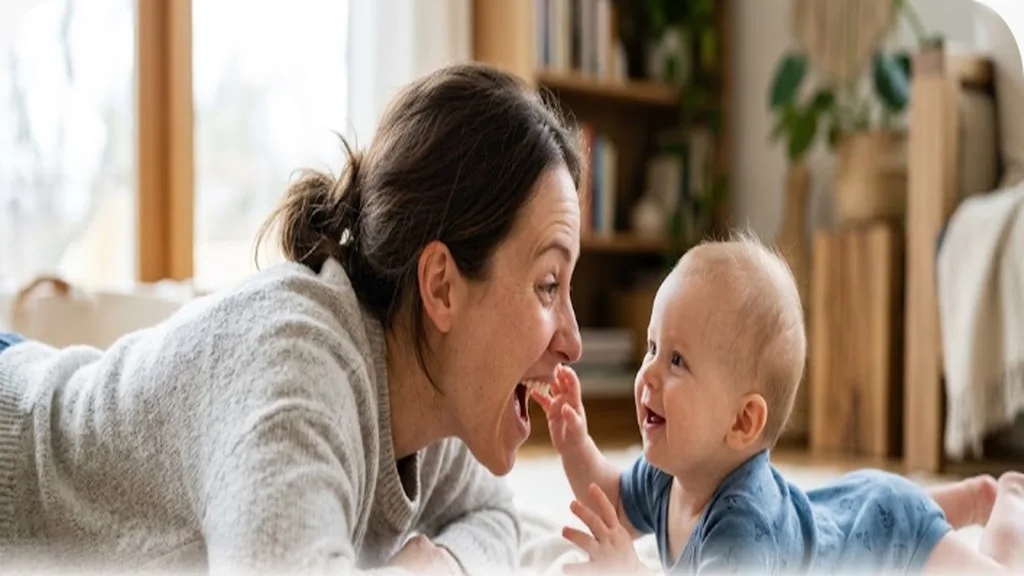
Responding to your baby’s sounds like they’re meaningful, even when they’re just practice babbling, reinforces the back-and-forth nature of conversation. If your baby says “ba-ba-ba” while looking at you, respond with a smile, eye contact, and a word back, like “Ball! Do you want the ball?” That loop of baby-sound, parent-response teaches the structure of conversation long before actual words are involved.
Pointing out objects and naming them in daily life, rather than only during dedicated “teaching” moments, helps vocabulary stick. “That’s a dog. The dog says woof,” said naturally while you’re actually looking at a dog on a walk, does more than an isolated flashcard ever will, because the word is tied to a real, interesting moment.
When Delayed Speech Is Worth a Conversation
Because the range of typical is so wide, it’s easy to either panic too early or wait too long. A general rule of thumb: it’s the combination of understanding, sounds, and social connection that matters most, not any single number of words by any single date.
Worth mentioning to your pediatrician: no babbling at all by nine months, no response to their name or to familiar voices, no attempt at any words by eighteen months, an apparent loss of sounds or words your baby used to make, or a general lack of interest in back-and-forth social interaction (not making eye contact, not pointing to show you things, not responding to simple requests). Hearing is also worth ruling out early, since even a mild, undetected hearing difference can quietly slow speech development — most hospitals screen for this at birth, but it’s a reasonable thing to ask about if speech seems unusually delayed.
If your pediatrician does flag a concern, early evaluation by a speech-language pathologist is usually the next step, and it’s worth knowing that early intervention tends to make a real difference — this isn’t a wait-and-see situation where nothing can be done in the meantime. Many of the same everyday habits described above (reading, narrating, responding to sounds as meaningful) are also exactly what a speech therapist would recommend, so starting them now helps either way. As with so much of this first year, as detailed in our guide to developmental milestones by month, the goal isn’t to hit an exact date — it’s to watch the overall trajectory and trust your own sense of your baby, while knowing when it’s reasonable to ask for a second opinion.

Hi everyone, i’m Eddy from Africa-Mozambique. I’m Passionate about thing and that’s why i started this blog- to share what i discover. Hope you like and support this project.