
You’ve pumped the milk, washed the bottle, and planned your first evening out, and your baby wants absolutely nothing to do with it. Bottle refusal is very common in breastfed babies, and it can feel stressful, especially if you’re returning to work soon.
The good news is that most babies eventually accept a bottle, or another way to drink milk, with patience and a few smart adjustments. Here’s why refusal happens and what to try.
Why Babies Refuse the Bottle
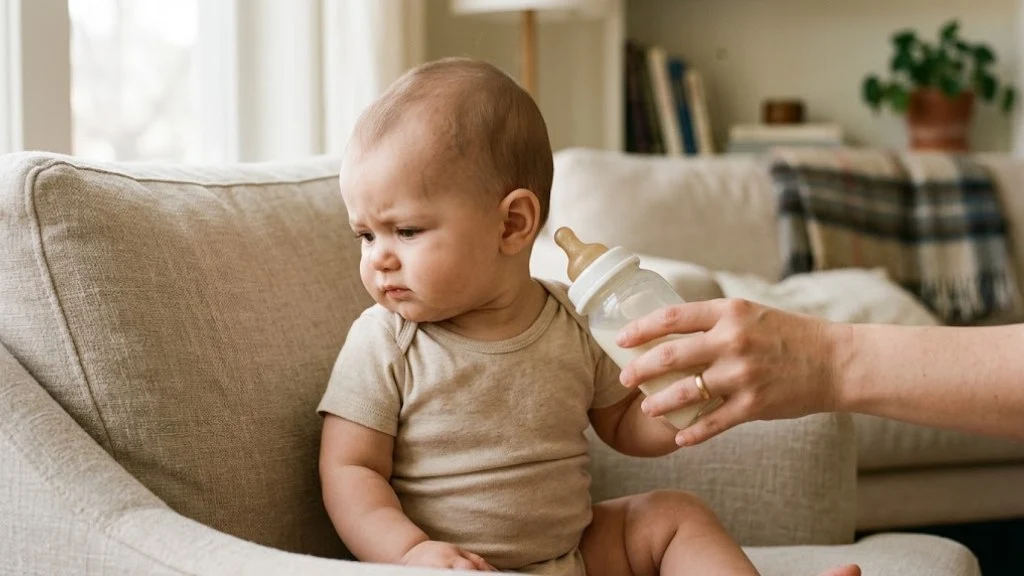
Drinking from a breast and drinking from a bottle are different skills. At the breast, babies control the flow, milk is warm, and they’re in a familiar, comforting position. A bottle feels, smells and flows differently.
Common reasons for refusal include:
- It’s unfamiliar. Babies who haven’t had a bottle by about 2 to 3 months are more likely to resist it.
- The flow is wrong. Too fast can overwhelm a baby; too slow can be frustrating.
- The person offering it. Many babies expect to breastfeed when they’re with their breastfeeding parent.
- Temperature or taste. Some babies are picky about milk temperature, or stored milk tastes slightly different.
- They’re not hungry enough, or they’re too hungry. A starving baby has little patience for something new.
Timing and Mood Matter
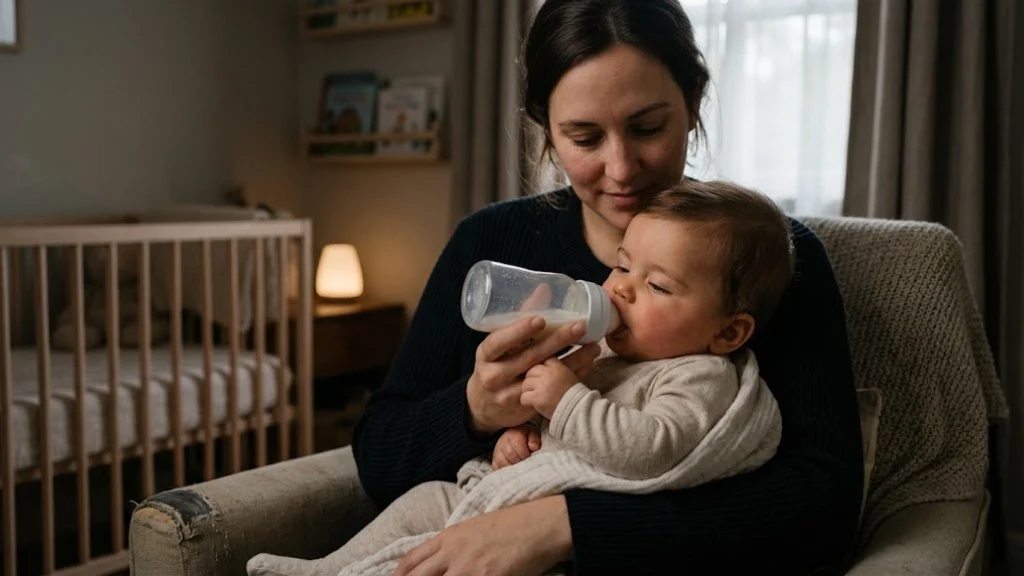
Offer the bottle when your baby is calm and only mildly hungry, rather than ravenous and upset. For many babies, about an hour after a breastfeed, or when they’re drowsy, works well.
Keep the mood relaxed. If your baby cries or turns away, stop, comfort them and try again later. Pushing through can make bottles feel stressful, which often makes refusal worse.



Short, regular practice helps. Many families offer a small bottle once a day, even before a return to work, so it becomes familiar.
Let Someone Else Offer It

Babies can smell their breastfeeding parent and may hold out for the breast. Often the bottle goes better when someone else offers it, such as a partner, grandparent or caregiver, ideally while the breastfeeding parent is out of the room or even out of the house.
Some babies accept a bottle more easily when held in a different position than for breastfeeding, such as facing outward, in a bouncy seat with the caregiver right in front of them, or while the caregiver walks or gently sways.
Try Paced Bottle Feeding
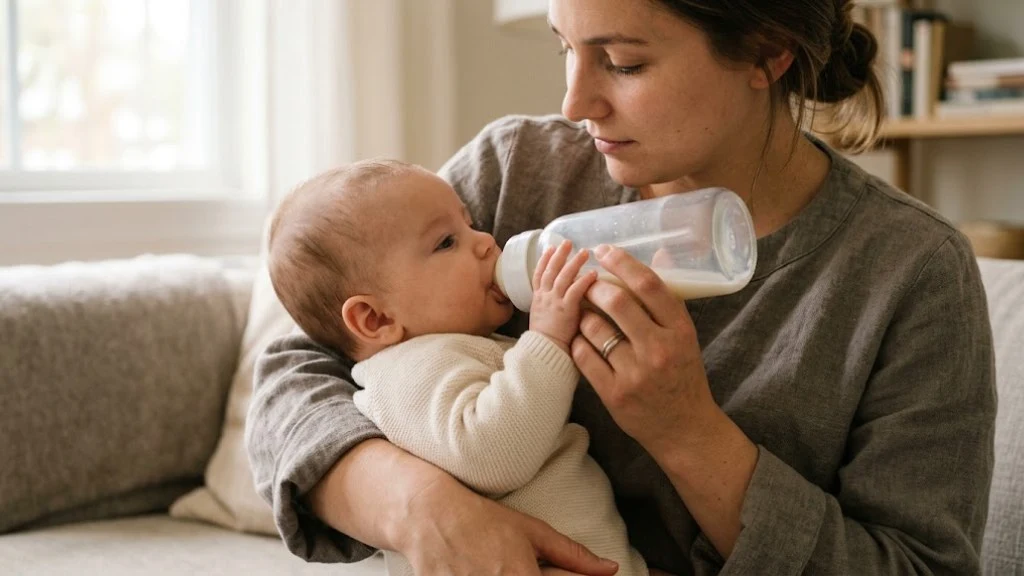
Paced bottle feeding mimics breastfeeding more closely and helps many breastfed babies feel in control:
- Hold your baby fairly upright.
- Touch the nipple to your baby’s lips and let them draw it into their mouth rather than pushing it in.
- Hold the bottle more horizontally so milk fills the nipple but doesn’t pour.
- Let your baby take breaks, tipping the bottle down every so often.
- Follow their cues; stop when they turn away or relax.
This approach can also help prevent overfeeding and makes it easier to switch between breast and bottle.
Adjust the Bottle and the Milk
Small changes can make a big difference:
- Nipple flow. Start with a slow-flow nipple, especially for younger babies.
- Nipple shape. Some babies prefer a wider base, others a narrower one. Trying one or two different types is reasonable, but you don’t need to buy every bottle on the market.
- Temperature. Try milk at body temperature, or cooler if your baby is teething.
- Warm the nipple. Running it under warm water can make it feel more familiar.
- Check the milk. If thawed milk smells soapy and your baby refuses only that milk, ask a lactation consultant about high-lipase milk.
Other Ways to Feed
If your baby keeps refusing the bottle, there are other options, especially for babies over about 4 to 6 months:
- An open cup (a small cup with careful support)
- A soft spout or straw cup
- A spoon for small amounts of milk
A lactation consultant or pediatrician can show you how to cup-feed safely. Some older babies also “reverse-cycle,” drinking little while apart from their breastfeeding parent and feeding more when together. That can be okay as long as they’re growing well and having enough wet diapers.
When to Ask for Help
Reach out to your pediatrician or an IBCLC if:
- Your baby is refusing all feeds, not just bottles.
- You notice fewer wet diapers, weight concerns or signs of dehydration.
- Feeding seems painful, or your baby coughs, chokes or struggles to coordinate sucking and swallowing.
Bottle refusal is usually a phase, not a permanent problem. Stay patient, keep it low-pressure, and remember that a calm, consistent approach goes a long way.

Hi everyone, i’m Eddy from Africa-Mozambique. I’m Passionate about thing and that’s why i started this blog- to share what i discover. Hope you like and support this project.