
Baby registries and “must-have” lists have a way of ballooning until they include forty items you’ll use twice. This isn’t a list of specific products or brands to buy, since no one article can responsibly tell you which stroller or which crib mattress to choose. It’s a walk through the actual categories a newborn needs covered in the first few months, which ones are genuinely safety-critical rather than just convenient, and where you can wait and see what your baby and your life actually need before spending money.
Sleep: the category where safety rules aren’t optional
This is the one area where “good enough” isn’t really a thing, because the guidance here exists specifically to reduce the risk of sleep-related infant death. Whatever your baby sleeps in, night or day, it needs to be a crib, bassinet, portable crib, or play yard that meets current Consumer Product Safety Commission (CPSC) safety standards, with a firm, flat, tight-fitting mattress and nothing else in it: no pillows, blankets, bumpers, positioners, or stuffed animals. The American Academy of Pediatrics (AAP) recommends room-sharing without bed-sharing for at least the first six months, so the sleep surface itself, whatever kind you choose, needs to fit wherever it’s actually going to live, whether that’s a full nursery or a corner of your bedroom.
If you’re considering a secondhand or hand-me-down crib, check it against current standards rather than assuming an older model is fine. Drop-side cribs were banned in the US in 2011 because the sides could detach and create a gap a baby could get trapped in, and any crib older than that shouldn’t be used regardless of how sturdy it looks. It’s also worth a quick check of the crib and mattress against CPSC’s recall database before use, since recalls happen more often than most people expect.
Sleep sacks or wearable blankets are worth having a couple of, since they solve the warmth problem without any loose fabric in the sleep space. Swaddles are optional and don’t reduce SIDS risk on their own, but many parents find them useful for the first couple of months; whichever swaddle method you use, your baby should always be placed on their back, and swaddling should stop once they show signs of trying to roll.
The car seat: buy new, install before you need it
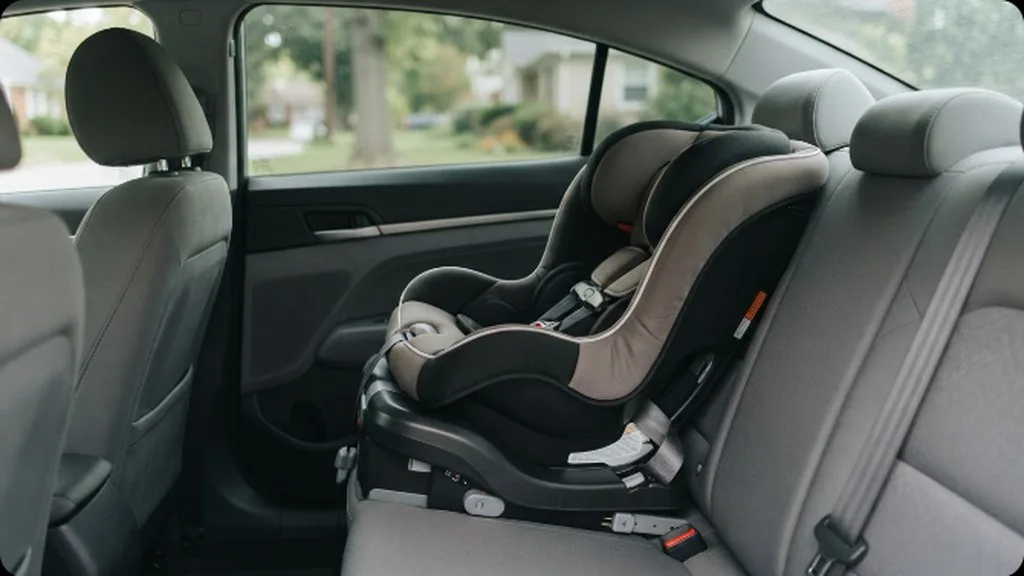
An infant car seat is the one item that’s genuinely non-negotiable before you leave the hospital, and it’s also the one place where buying secondhand is a real risk rather than just a preference. A used car seat’s crash history is usually unknown, and even undamaged seats expire, typically 6 to 10 years from the manufacture date depending on the model, because the plastic degrades over time. Buy new if you can, and if a hand-me-down is your only option, use it only if you know its full history and it hasn’t been in any collision, however minor.
Infant seats are rear-facing by design, and current guidance from the AAP and the National Highway Traffic Safety Administration (NHTSA) recommends keeping children rear-facing until at least age 2, and ideally as long as the seat’s height and weight limits allow beyond that. Get the seat installed, or at least test-fit it, well before your due date rather than the day you’re discharged, and many fire stations and hospitals offer free installation checks by certified car seat technicians if you want a second set of eyes on it. This is genuinely worth doing; a surprising share of car seats are installed with some kind of error, from a loose base to a chest clip positioned too low.

Clothing: fewer sizes, more newborn-size than you’d think
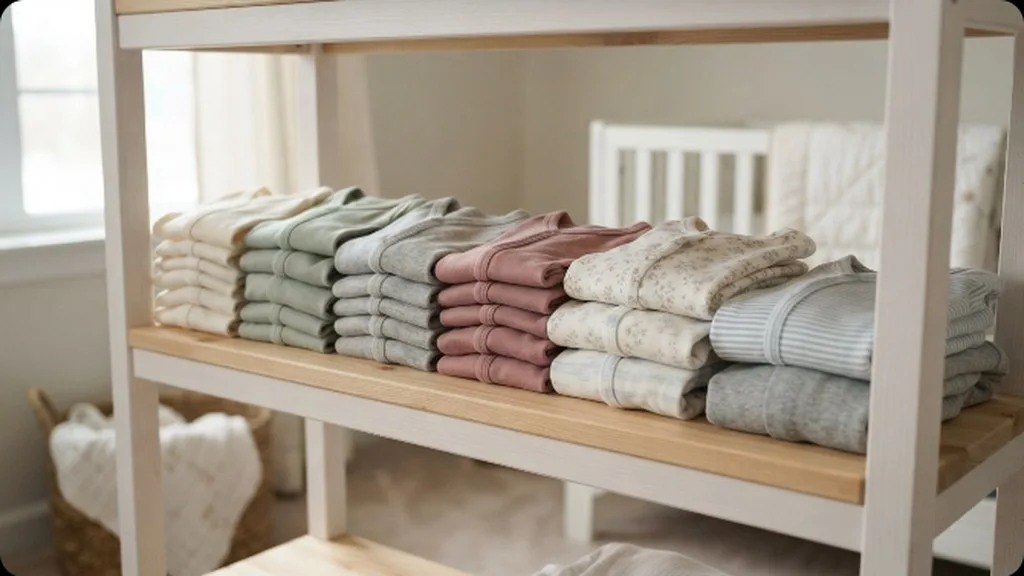
Newborns grow fast enough that a full wardrobe in one size is often a waste. A reasonable starting point is a handful of items each in newborn and 0-3 month sizing, since some babies skip newborn-size clothing within a couple of weeks while others stay in it for a month or more depending on their birth size. Practical basics: several onesies or bodysuits, a few sleepers or footed outfits that make diaper changes easy without fully undressing your baby, a couple of light layers appropriate to your climate, and mittens or footed sleepers with covered hands if your baby tends to scratch their face with their own fingernails.
Fabric and closures matter more than the outfit looking cute. Snaps or zippers down the front or along the legs are much easier at 3am than anything requiring you to pull clothing over your baby’s head, and soft, breathable fabric matters more in the newborn stage than it will later. It’s worth holding off on buying too much in any single size until after your baby arrives, since gift-giving from family and friends often covers more of this category than people expect.
Diapering: the highest-volume category by far
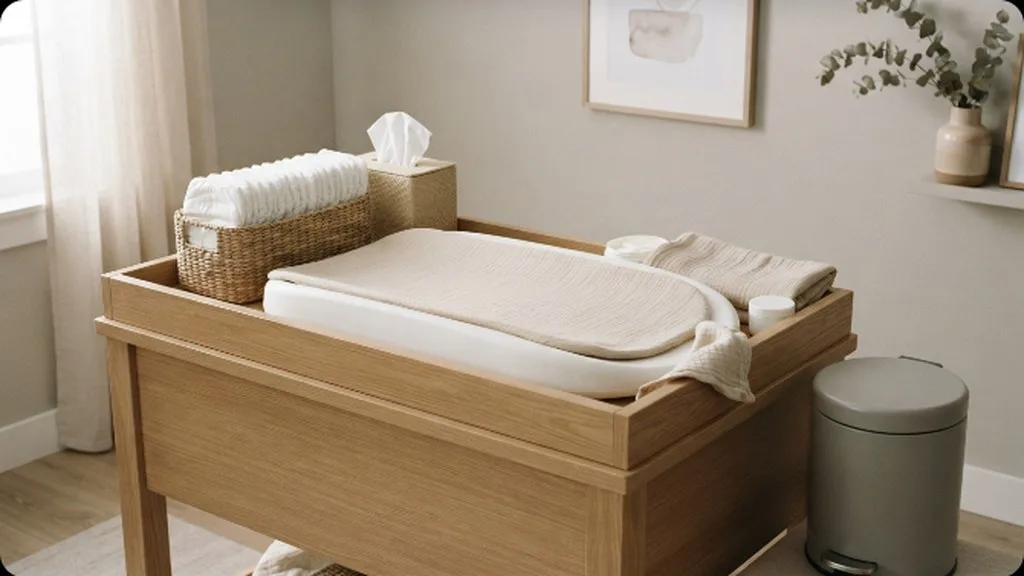
Whether you’re using disposable or cloth diapers, this is the supply you’ll go through fastest, often 8 to 12 changes a day in the newborn stage. Beyond diapers themselves, you’ll want a changing surface (a dedicated changing table isn’t required; a changing pad on a dresser or even a folded towel on the floor works fine), wipes, diaper cream for irritation, and a way to dispose of or launder what you use. If you’re using cloth diapers, it’s worth deciding on your laundering routine before your baby arrives rather than figuring it out during the newborn haze.
One thing worth knowing ahead of time: diaper sizing is based on weight, not age, and newborns often move out of the smallest size faster than expected, so it’s reasonable to buy less of the very smallest size than you initially planned and expect to size up within the first few weeks.
Feeding: the setup depends on how you’re feeding
The specific feeding items you need depend heavily on whether you’re breastfeeding, bottle-feeding, or some combination, and the details of what bottles, pumps, and formula setups actually involve are worth their own dedicated reading rather than a quick summary here. At minimum, most parents want a few burp cloths, a couple of bibs for the spit-up stage, and if you’re bottle-feeding in any capacity, a small set of newborn-appropriate bottles to start, since many babies have preferences about bottle and nipple shape that you won’t know until you try.
Bathing and basic grooming
A newborn doesn’t need daily baths, and until the umbilical cord stump falls off, sponge baths are generally recommended over full immersion. A simple infant bath support or insert that fits in your sink or a regular bathtub is enough; elaborate baby bathtubs aren’t necessary. For grooming, a soft brush, a nail file or baby-safe clippers (many parents find newborn nails easier to file than clip in the first few weeks), and a bulb syringe or nasal aspirator for stuffy noses round out the basics. A baby-safe thermometer is worth having on hand before you need it rather than searching for one at 2am with a feverish baby.
Getting around: carrier, stroller, and the gear that travels with you
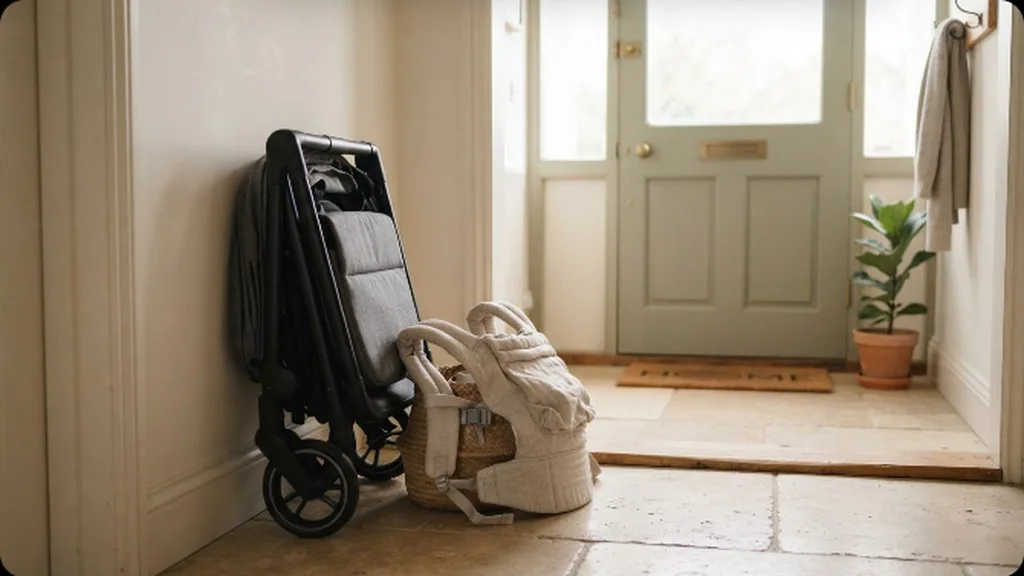
A baby carrier and a stroller serve different purposes and most families end up using both, but you don’t need to buy both before your baby arrives; it’s reasonable to start with whichever matches your daily routine and add the other once you know what you actually need. If you’re buying a carrier, look for one certified to current safety standards for infant carriers, and know that some carriers require a newborn insert or aren’t rated for use until a baby reaches a minimum weight, so check the manufacturer’s guidance for the specific product rather than assuming all carriers work from birth.
A diaper bag is genuinely useful, though it doesn’t need to be purpose-bought if you already have a bag with enough structure and pockets. What matters is that it’s organized enough to grab quickly, since you’ll be doing that a lot.
What can wait
It’s easy to feel like everything needs to be ready before your due date, but a fair amount of newborn gear can be figured out after your baby arrives, once you know things like their temperament, your feeding method, and your actual daily rhythm. Specialized soothing gear, a full toy rotation, a dedicated nursing chair, and multiple stroller attachments are all reasonable to defer. Babies genuinely don’t know or care about a fully decorated nursery in the first few months; the safety basics matter far more than the aesthetics.
Country-specific notes worth knowing
Car seat laws and crib safety standards vary somewhat by country, so it’s worth checking your own country’s current requirements rather than assuming US-specific guidance applies exactly. In the UK, the NHS provides guidance through resources like the Red Book (Personal Child Health Record), and car seat law requires rear-facing seats for infants with some specific exceptions. Canada has its own crib and car seat regulations enforced through Health Canada, and Australia’s product safety standards are set through the Australian Competition and Consumer Commission alongside state-based car seat laws that specify minimum ages for switching seat types. Wherever you live, checking your own country’s consumer product safety agency for current crib and car seat standards is worth the ten minutes it takes.
FAQ
Do I really need to buy everything before the baby arrives?
No. The genuinely time-sensitive items are a safe sleep space and an installed car seat, since you need the car seat to leave the hospital. Most other categories can be filled in gradually over the first few weeks.
Is it ever okay to buy a used crib or car seat?
A used car seat isn’t recommended unless you know its full history and it’s never been in a collision, because crash damage isn’t always visible and seats expire. A used crib can be fine if it meets current safety standards (no drop-side, correct slat spacing) and hasn’t been recalled, but a new mattress is worth the cost even with a secondhand crib frame.
How much of the newborn-size clothing will actually get used?
It varies a lot by baby. Smaller babies stay in newborn sizing for several weeks, while larger newborns can skip it almost entirely. Buying a small amount and leaning on gifts or a later exchange tends to work out better than stocking up heavily in one size.
The bottom line
The actual safety-critical items are narrower than most checklists make them feel: a compliant sleep space with nothing extra in it, and a properly installed, new (or verified crash-free) car seat. Everything else, clothing, diapering supplies, feeding gear, a carrier or stroller, bathing basics, is genuinely useful but more flexible on timing and quantity than the registry industry tends to suggest. It’s reasonable to start with less than you think you need and fill in gaps as you learn what your specific baby and routine actually require.

Hi everyone, i’m Eddy from Africa-Mozambique. I’m Passionate about thing and that’s why i started this blog- to share what i discover. Hope you like and support this project.