
Somewhere around the middle of the first year, feeding shifts from an exclusively milk-based job to one that also involves food on a spoon, or in your baby’s own hand, depending on which path you choose. It’s an exciting milestone and also a slightly nerve-wracking one, especially the first time you watch your baby gag on a piece of banana. Here’s what actually matters when it comes to starting solids, and what’s more flexible than it might seem.
When to actually start
The American Academy of Pediatrics and most major pediatric bodies recommend starting solid foods around 6 months, alongside continued breast milk or formula rather than replacing it. That’s a shift from older guidance that sometimes suggested starting closer to 4 months, and the reasoning behind the later timeline is mostly about developmental readiness rather than a specific date on the calendar.
Readiness matters more than the exact week your baby turns 6 months old. The signs pediatricians look for are fairly consistent: your baby can hold their head steady and sit upright with support, has lost the tongue-thrust reflex that used to push food back out of their mouth automatically, shows real interest in food by watching you eat, reaching for it, or opening their mouth as it approaches, and can move food to the back of their mouth to swallow rather than just mouthing it. Most babies hit this combination somewhere between 5 and 7 months, and a baby who’s a few weeks early or late to show all the signs isn’t behind or ahead of anything meaningful.
Purees or baby-led weaning: both are legitimate
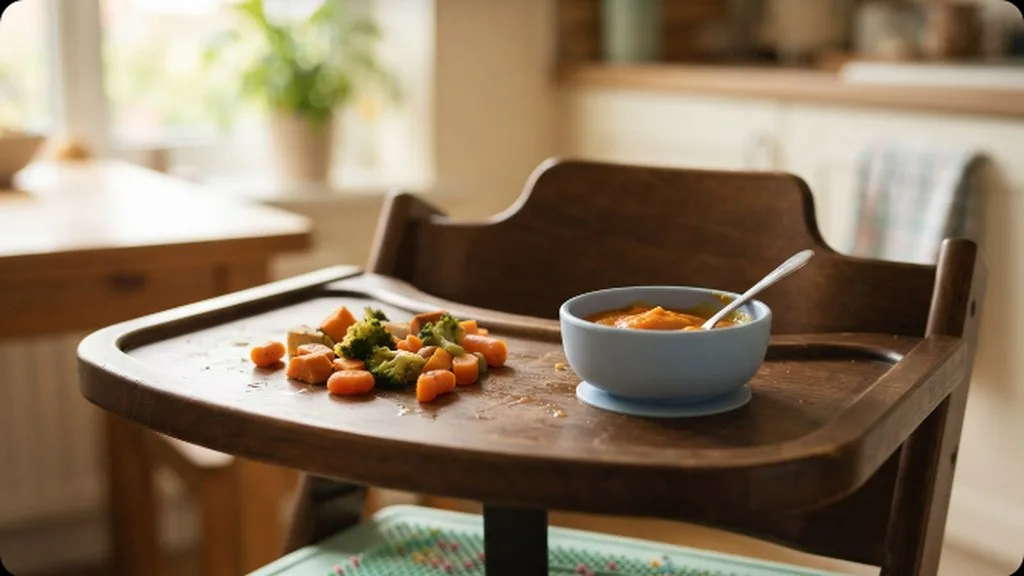
There are two broad approaches, and neither is more correct than the other from a nutrition or safety standpoint when done with reasonable care. Traditional spoon-feeding starts with smooth purees, usually a single-ingredient food like iron-fortified baby cereal mixed with breast milk or formula, or a simple pureed vegetable or fruit, gradually moving to thicker textures and lumps as your baby gets used to eating. Baby-led weaning skips purees largely or entirely and offers soft, appropriately sized whole foods that your baby picks up and feeds themselves from the start, like a soft-cooked spear of sweet potato or a ripe avocado slice.
Some families do a mix of both, offering purees for some meals and finger foods for others. What matters more than which camp you’re in is texture safety and supervision, which is the same regardless of approach.
Starting with iron in mind
Iron is one of the more concrete nutritional reasons solids start around 6 months rather than earlier or later: a baby’s iron stores from birth start to run low around this age, and breast milk is naturally low in iron, so solid foods become an important source. Iron-fortified baby cereal, pureed meats, lentils, and beans are common first choices for this reason, though there’s no requirement to start with cereal specifically if it’s not appealing to your baby or your family’s food culture. Any iron-rich, appropriately textured first food works.



Introducing common allergens early, not late
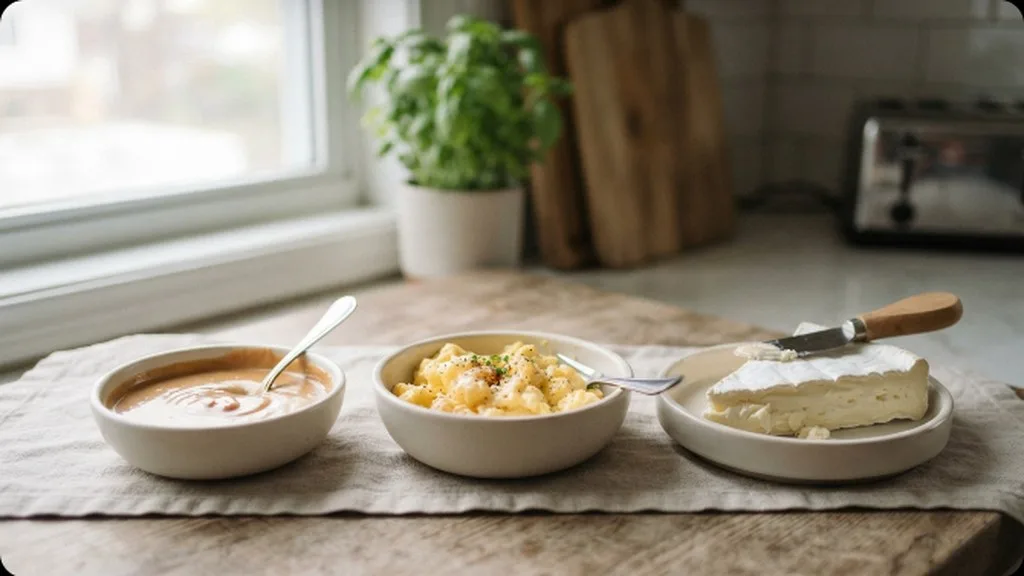
This is one of the bigger shifts in guidance over the last decade, and it’s worth understanding because it runs counter to what a lot of parents were told even fairly recently. Older advice used to suggest delaying foods like peanut, egg, dairy, and fish to reduce allergy risk. Current guidance from the AAP and allergy specialty organizations is essentially the opposite: introducing allergenic foods early, around the same time as other first foods and not later than necessary, is now associated with a lower risk of developing a food allergy, not a higher one, for most babies.
For peanut specifically, research has been strong enough that guidance now recommends introducing peanut-containing foods (in an appropriately prepared, non-choking form, like a thin peanut butter mixed into puree, never whole nuts or a spoonful of peanut butter which is itself a choking hazard) around 4 to 6 months for babies without risk factors, and even earlier under a pediatrician’s guidance for babies with severe eczema or an existing egg allergy, since those babies have a higher baseline risk of peanut allergy. If your baby has significant eczema or a known food allergy already, it’s worth talking to your pediatrician before introducing peanut specifically, since they may want to guide the timing or do it under medical supervision.
For other common allergens, the general approach is to introduce them one at a time, in an age-appropriate texture, and watch for a reaction over the following couple of hours to a day, the same way you’d introduce any new food.
What a reaction actually looks like
Most new foods cause no reaction at all. When something does happen, it’s usually mild: a rash around the mouth, some fussiness, or mild digestive upset. True allergic reactions, hives spreading beyond the mouth, swelling of the face or lips, vomiting, or difficulty breathing, are less common but are the reason it’s worth introducing new allergenic foods at home during a time when you can watch your baby closely, rather than for the first time at daycare or a restaurant. If you see swelling, difficulty breathing, or widespread hives, that’s an emergency, not a wait-and-see situation.
Foods and things to actually avoid
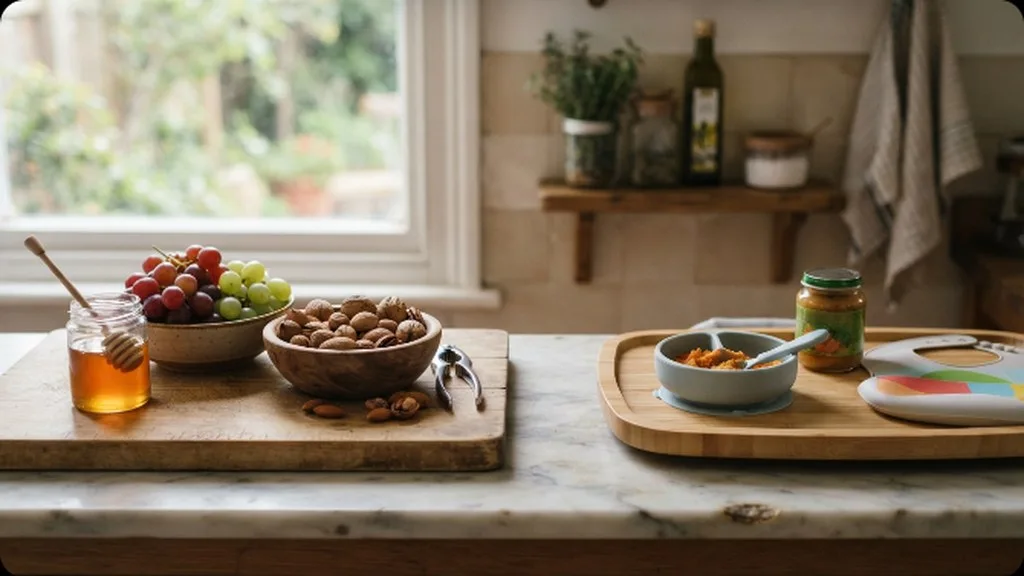
A handful of things are genuinely off the table for the first year, not just softer preferences. Honey is a real risk before 12 months because of infant botulism, and this includes honey baked into foods, not just honey straight from the jar. Cow’s milk as a main drink (as opposed to small amounts cooked into food) isn’t recommended before 12 months, since it doesn’t have the right nutritional balance for a baby that age and can be hard on their kidneys and digestive system. Added salt and sugar aren’t necessary and are worth minimizing, mostly to avoid building a preference for very salty or sweet food early rather than because a small amount is dangerous.
Choking hazards are a separate and important category: whole grapes, whole cherry tomatoes, hot dog rounds, hard raw vegetables, popcorn, whole nuts, chunks of meat or cheese, and hard candy are common causes of choking in babies and toddlers and should be cut, cooked, or avoided appropriately until your child is older and chewing more reliably, generally well past their first birthday for some of these.
Gagging versus choking, because they look alarming but aren’t the same thing
This is one of the more useful things to understand before you start, because the first time it happens it can be genuinely frightening. Gagging is loud, your baby’s face may turn red, and they’ll cough or retch, sometimes bringing food back up. It looks dramatic but it’s actually your baby’s airway protection reflex working correctly, and it’s extremely common, especially with baby-led weaning or when textures increase. Choking is quieter and more dangerous: it can involve weak or silent coughing, an inability to cry or make noise, and bluish skin color. If you’re ever unsure which one you’re watching, staying calm, staying close, and letting your baby work through a gag without intervening (unless it’s clearly choking) is the right instinct. Taking an infant CPR and choking response class before starting solids is a genuinely useful few hours for any parent, regardless of which feeding approach you choose.
How much and how often, in the early months
In the first weeks of solids, amounts are small and mostly about practice rather than nutrition, since breast milk or formula is still providing the bulk of your baby’s calories and nutrients through roughly the first year. A meal might be a spoonful or two, or a couple of pieces of soft finger food, once a day to start, building up to two or three solid meals a day by around 8 to 9 months as your baby’s interest and skill grow (a natural continuation of the demand-based feeding pattern from the newborn months). There’s no need to rush this progression; a baby who’s still mostly interested in milk at 7 months and only nibbling small amounts of food isn’t falling behind, as long as they’re generally curious and willing to engage with food over time.
Family meals and food culture

There’s no rule that says a baby’s first foods have to be bland or separate from what the rest of the family eats. Many cultures introduce babies to age-appropriately prepared versions of the same foods everyone else is having, softened, mashed, or cut safely rather than served as a separate “baby food.” This approach has some real advantages: it’s less work than cooking separately, and it exposes your baby to a wider variety of flavors and textures from the start, which some research links to less picky eating later on. If your family’s typical meals are spicy, strongly flavored, or otherwise different from the stereotypical bland first foods, there’s generally no need to change that for your baby, as long as portions and textures are appropriately sized and choking hazards are avoided.
Country-specific notes worth knowing
Guidance across the US, UK, Canada, and Australia is closely aligned on the core recommendation of starting around 6 months alongside continued breast milk or formula, and all four now recommend early allergen introduction rather than delay. The UK’s NHS has been especially proactive in publishing guidance on early peanut and egg introduction, partly in response to research conducted in the UK showing the benefits of early exposure. Where things vary a little is in how formalized “baby-led weaning” is as a term and movement, since it originated in the UK and has more mainstream visibility and NHS-endorsed resources there than in some other countries, though the underlying approach is used by families everywhere.
When to loop in your pediatrician
Most families can start solids without a specific green light from their pediatrician, since it usually comes up naturally at a checkup around this age anyway. That said, it’s worth a specific conversation if your baby was born premature, since readiness timing is often based on adjusted rather than actual age, if your baby has a diagnosed food allergy or significant eczema, if there’s a strong family history of food allergy, or if you have any concerns about your baby’s ability to swallow safely.
FAQ
What if my baby refuses solids at first?
Very common, and not a cause for concern on its own. Milk is still doing the nutritional heavy lifting at this stage, so a baby who’s uninterested at 6 months often comes around within a few weeks with continued low-pressure exposure.
Do I need to introduce foods in a specific order?
No. There’s no medically required sequence. Starting with iron-rich foods is a reasonable default, but the order after that is mostly about your baby’s interest and your family’s preferences.
Is baby-led weaning riskier for choking than purees?
Research hasn’t shown baby-led weaning to carry a higher choking risk than purees when foods are prepared in appropriately soft, safely sized forms and a baby meets the usual readiness signs before starting. The food’s texture and size matter more than which broad approach you’re using.
The bottom line
Starting solids is less about hitting a precise timeline and more about watching for genuine readiness, offering a variety of foods including common allergens early rather than late, and understanding the real difference between a startling but normal gag and actual choking. Whether you lead with purees, finger foods, or a mix of both, the goal for these first months is exposure and practice, not meeting any particular volume or variety target, while milk continues to do most of the nutritional work.

Hi everyone, i’m Eddy from Africa-Mozambique. I’m Passionate about thing and that’s why i started this blog- to share what i discover. Hope you like and support this project.