
Few things make a new parent hold their breath quite like watching a sleeping baby. You check that their chest is rising. You check again. It is completely normal to feel anxious about sleep in the early months, and the good news is that a handful of simple, well-researched habits make a real difference.
Sudden Infant Death Syndrome (SIDS) and other sleep-related infant deaths are rare, but they remain a leading cause of death in babies between one month and one year old. Most of these deaths happen in the first six months. Major health organizations, including the American Academy of Pediatrics (AAP), agree on a clear set of steps that lower the risk. None of them require special gadgets or expensive products.
This guide walks through those recommendations in plain language, so you can set up a safe sleep space once and then rest a little easier.
The ABCs: Alone, on the Back, in a Crib

The easiest way to remember safe sleep is the ABCs. Your baby should sleep Alone, on their Back, in a Crib (or bassinet or play yard) that meets current safety standards.
Alone means no pillows, blankets, bumpers, stuffed animals or other people in the sleep space. On the back applies to every sleep, including naps, until your baby’s first birthday. Babies who sleep on their backs are far less likely to die of SIDS than babies placed on their tummies or sides.
Many parents worry that a baby sleeping on their back will choke if they spit up. Healthy babies have a natural gag reflex that protects their airway, and research has not shown an increased choking risk with back sleeping.



Once your baby can roll from back to tummy and tummy to back on their own, you can let them stay in whatever position they roll into. Keep placing them down on their back to start each sleep.
Keep the Sleep Space Bare

A safe crib can look a little boring, and that’s exactly the point. Use a firm, flat mattress that fits snugly in the frame, covered with a fitted sheet made for that mattress. That’s it.
Things to leave out of the crib:
- Pillows, quilts, comforters and loose blankets
- Crib bumpers, including mesh “breathable” versions
- Stuffed animals and soft toys
- Sleep positioners, wedges and nests
- Anything that hangs into the crib, such as cords from blinds or monitors
Soft items can cover a baby’s nose and mouth or trap them in a dangerous position. If you’re worried about your baby being cold, a wearable blanket or sleep sack keeps them warm without loose fabric.
Also avoid letting your baby sleep for long stretches in car seats, swings, bouncers or loungers. If your baby falls asleep in one of these, move them to a flat, firm sleep surface as soon as you can. Inclined surfaces can let a baby’s head tip forward, which may restrict breathing.
Room-Sharing Without Bed-Sharing
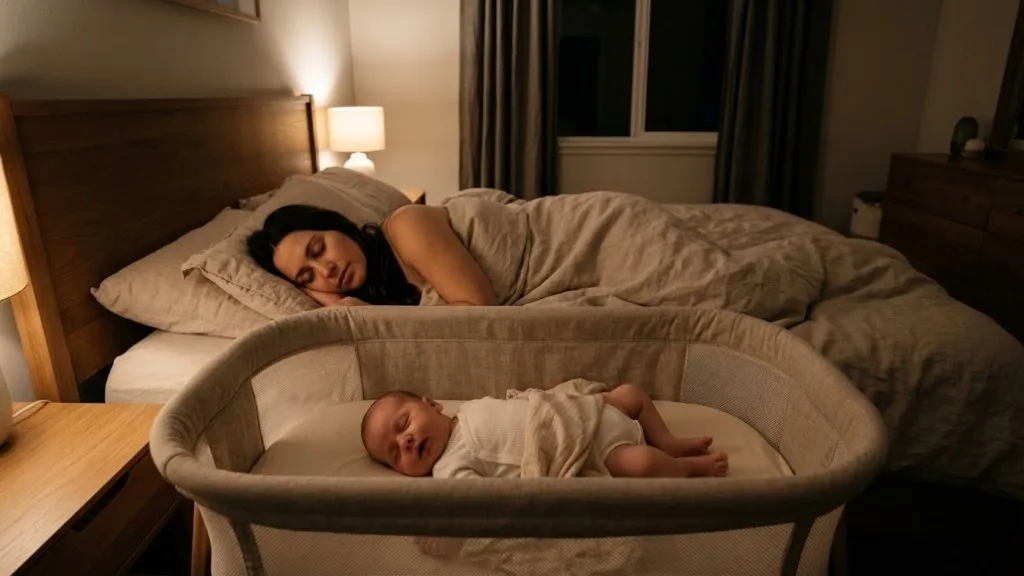
The AAP recommends that babies sleep in the parents’ room, on a separate sleep surface, ideally for at least the first six months. Keeping the bassinet or crib close to your bed makes night feeds easier and has been linked to a lower risk of SIDS.
Room-sharing is different from bed-sharing. Sharing an adult bed, sofa or armchair with a baby increases the risk of suffocation and SIDS, especially when a parent is very tired, has been drinking alcohol, smokes, or takes medication that causes drowsiness, and when the baby was born early or small.
Realistically, many parents fall asleep while feeding at night. If you think you might doze off, it’s safer to feed your baby in your bed than on a sofa or armchair. Remove pillows and blankets from around the baby beforehand, and move your baby back to their own sleep space as soon as you wake.
Don’t Let Baby Overheat
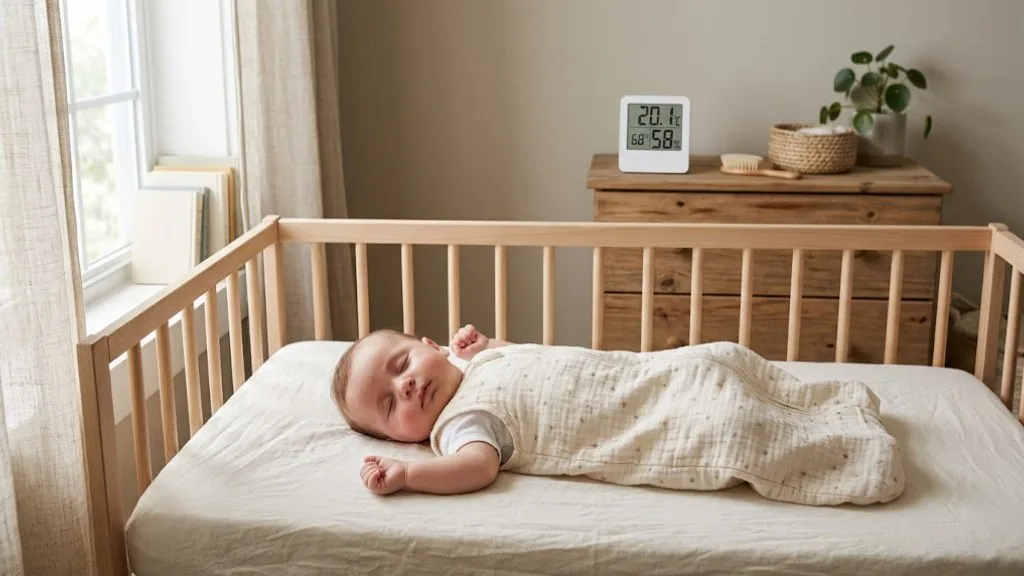
Overheating is a known risk factor for SIDS. Babies don’t need to be bundled up in lots of layers to sleep well.
A simple rule of thumb: dress your baby in no more than one layer more than you would wear to be comfortable in the same room. Keep the room at a temperature that feels comfortable for a lightly dressed adult.
Signs your baby may be too warm include sweating, damp hair, flushed cheeks, heat rash or rapid breathing. Feel the back of their neck or chest; it should feel warm, not hot or sweaty. Hands and feet often feel cool, which is normal and not a reliable sign of temperature.
Skip hats for indoor sleep, and stop swaddling as soon as your baby shows signs of trying to roll over.
Other Habits That Lower the Risk
Safe sleep isn’t only about the crib. A few other habits are linked to a lower risk of SIDS:
- Offer a pacifier at sleep time. If you’re breastfeeding, you can wait until feeding is well established. Don’t force it, and there’s no need to put it back in once your baby falls asleep.
- Breastfeed if you can. Any amount of breast milk is linked to a lower SIDS risk.
- Keep your baby’s environment smoke-free. That includes during pregnancy and in the car and home after birth.
- Keep up with well-baby visits and immunizations. Vaccinated babies have a lower risk of SIDS.
- Give plenty of supervised tummy time while awake. It builds strength and helps prevent flat spots on the head.
Products That Claim to Prevent SIDS
You’ll see plenty of products marketed as making sleep “safer,” from wedges to positioners to home heart and breathing monitors. Be cautious. No product has been shown to prevent SIDS, and some sleep aids have been recalled because they were linked to infant deaths.
Home monitors that track oxygen or heart rate can increase anxiety without improving safety for healthy babies. If your baby has a specific medical condition, your pediatrician will tell you whether any monitoring is needed.
A Quick Safe Sleep Checklist
Before you lay your baby down tonight, run through this list:
- Baby is on their back
- Firm, flat mattress with a fitted sheet only
- No pillows, blankets, bumpers or toys
- Crib or bassinet is in your room
- Baby is dressed lightly, with no hat
- No smoking around baby
Share this list with grandparents, babysitters and anyone else who puts your baby to sleep. Guidelines have changed a lot over the years, and the people who love your baby may remember older advice.
If you ever have questions about your baby’s sleep, breathing or a specific product, talk with your pediatrician. They’re your best partner in keeping your baby safe.

Hi everyone, i’m Eddy from Africa-Mozambique. I’m Passionate about thing and that’s why i started this blog- to share what i discover. Hope you like and support this project.