
There’s a particular kind of defeat in watching a toddler who happily ate green beans last week suddenly refuse to even look at them today, arms crossed, lips sealed, absolutely resolute. If this sounds familiar, you’re not doing anything wrong, and your toddler isn’t broken — picky eating is one of the most universal stages of early childhood, and it follows patterns that are worth understanding rather than fighting.
Why Picky Eating Is So Common at This Age

Toddler food refusal has real developmental logic behind it, even when it feels completely irrational in the moment. Around one to three years old, growth slows down significantly compared to the explosive pace of the first year, which naturally reduces appetite and makes toddlers far less motivated to eat large or varied quantities than they were as fast-growing infants.
This is also the age when a toddler’s drive for independence and control is ramping up fast, and mealtime is one of the few arenas where they have real, undeniable power: you can offer the food, but you absolutely cannot make them eat it. Refusing food, especially food a parent clearly wants them to eat, becomes an easy and effective way to exercise that control, regardless of whether the toddler actually dislikes the food in question.
There’s also a well-documented evolutionary piece called neophobia — a built-in wariness of new foods that peaks in toddlerhood and is thought to be a survival mechanism from a time when eating an unfamiliar plant carried real risk. It’s not a flaw in your toddler’s personality; it’s a biologically normal caution toward anything unfamiliar, which is exactly why new foods often get rejected on sight before they’ve even been tasted.
What’s Normal vs. What’s Worth Watching
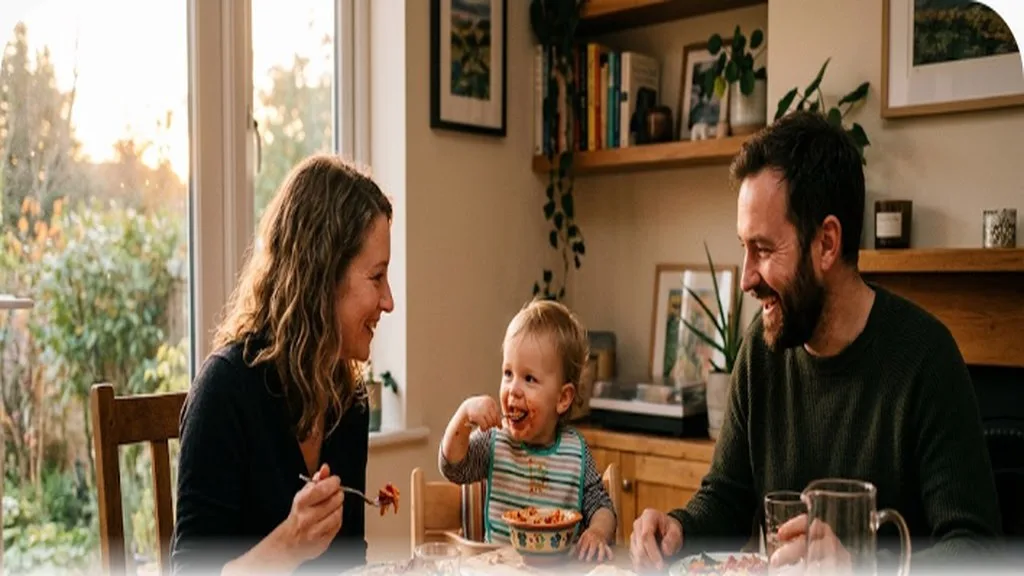
Typical picky eating looks like: refusing a food repeatedly before eventually accepting it, going through phases of eating almost nothing but a handful of “safe” foods, having strong texture or temperature preferences, and eating wildly different amounts from day to day or even meal to meal. A toddler who eats a huge lunch and then barely touches dinner, or who eats great for three days and then subsists mostly on crackers for the next two, is behaving completely normally.
What’s worth raising with a pediatrician is a somewhat different picture: a very limited list of accepted foods (fewer than about ten) that isn’t expanding over time, dropping entire food groups or textures completely, signs of poor weight gain or falling off their growth curve, intense distress (gagging, vomiting, panic) around food rather than simple refusal, or eating difficulties that seem to extend beyond food into other sensory areas, like clothing tags or loud noises. These patterns, especially combined with each other, can sometimes point to extreme picky eating or a feeding disorder that benefits from a feeding specialist’s input, rather than the ordinary toddler pickiness that resolves with time.



Strategies That Actually Reduce Mealtime Battles

The approach with the strongest track record is often summarized as “division of responsibility”: the parent decides what food is offered, when, and where, while the child decides whether to eat it and how much. This sounds simple, but it reframes mealtime away from a battle to be won and toward a routine to be maintained, which tends to lower the emotional temperature for everyone involved.
Repeated, pressure-free exposure is the other major lever. Research on food acceptance consistently shows that children often need to see or be offered a new food eight, ten, or more times before they’re willing to actually taste it — and that’s with zero pressure attached. Serving a small piece of a rejected food alongside foods you know your toddler already likes, without commentary or coaxing, keeps that food in rotation without turning it into a fight.
Involving toddlers in low-stakes parts of meal prep — washing vegetables, tearing lettuce, stirring a bowl — builds familiarity and a sense of ownership that sometimes translates into more willingness to actually eat the finished dish. Eating together as a family as often as possible also matters more than any individual food strategy, since toddlers learn a huge amount about eating simply by watching the people around them eat calmly and without drama.
Keeping meal and snack times on a predictable schedule, rather than grazing all day, also helps — a toddler who’s had a steady stream of snacks since breakfast has very little incentive to eat an actual meal, regardless of what’s on the plate.
What Not to Do (Even Though It’s Tempting)

Bribing, bargaining, or using dessert as a reward for eating vegetables feels like a quick fix, but it tends to backfire by sending the message that the “reward” food is more valuable and the vegetable is a chore to get through, which often makes the vegetable less appealing over time, not more.
Forcing a bite, insisting on a “no thank you bite,” or making a toddler sit at the table until a plate is clean rarely works long-term and can actually increase anxiety around food and mealtime battles rather than resolving them. Becoming a short-order cook — making a separate, different meal every time a toddler rejects dinner — removes the pressure-free repeated exposure that eventually builds acceptance, since there’s no incentive to ever try the original food again.
Perhaps most importantly, try not to let mealtime become visibly stressful or emotionally loaded, even when it’s frustrating in the moment. Toddlers are remarkably good at picking up on tension, and a parent’s anxiety about eating can itself become part of what makes mealtime feel like a battleground. Staying calm, offering a reasonable variety without comment, and trusting the process — even when it takes weeks or months longer than you’d like — is, frustratingly, usually the fastest way through.

Hi everyone, i’m Eddy from Africa-Mozambique. I’m Passionate about thing and that’s why i started this blog- to share what i discover. Hope you like and support this project.