
For the first months, having your baby sleep a few feet from your bed makes life easier. Night feeds are quicker, you can hear every little sigh, and there’s comfort in knowing they’re right there. But at some point, many families start wondering: is it time for the baby to move into their own room?
There’s no single perfect moment that works for every family. What matters most is that your baby keeps sleeping safely, and that the change works for everyone in the house. Here’s how to think it through.
What the Guidelines Say About Timing

The American Academy of Pediatrics recommends that babies sleep in their parents’ room, on a separate sleep surface such as a crib or bassinet, ideally for at least the first six months. Room-sharing during this period is linked to a lower risk of Sudden Infant Death Syndrome (SIDS), which is most common in the first six months of life.
After six months, the decision is more flexible. Some families move their baby around six months, others closer to a year, and some keep room-sharing longer because of space or preference. All of those can be reasonable choices as long as the baby’s sleep space itself stays safe.
What doesn’t change with the move: your baby should still sleep on their back, on a firm, flat mattress, with no pillows, blankets, bumpers or toys in the crib until at least their first birthday.
Signs Your Family Might Be Ready

Once you’re past the six-month mark, a few signs suggest a move might help:



- Everyone is waking each other up. Babies are noisy sleepers. Grunts, squeaks and rustling can wake light-sleeping parents, and your movements or snoring may wake the baby too.
- Your baby is outgrowing the bassinet. Most bassinets have weight limits, and babies who can push up or roll need a crib.
- Night feeds are fewer. If your baby is sleeping longer stretches, the convenience of being close matters less.
- You need your space back. It’s okay to want your bedroom to feel like an adult space again.
On the other hand, it’s fine to wait if your baby is unwell, you’re about to travel, or there’s another big change happening, like a new caregiver or a move to a new home. Making one change at a time usually goes more smoothly.
Getting the Nursery Ready
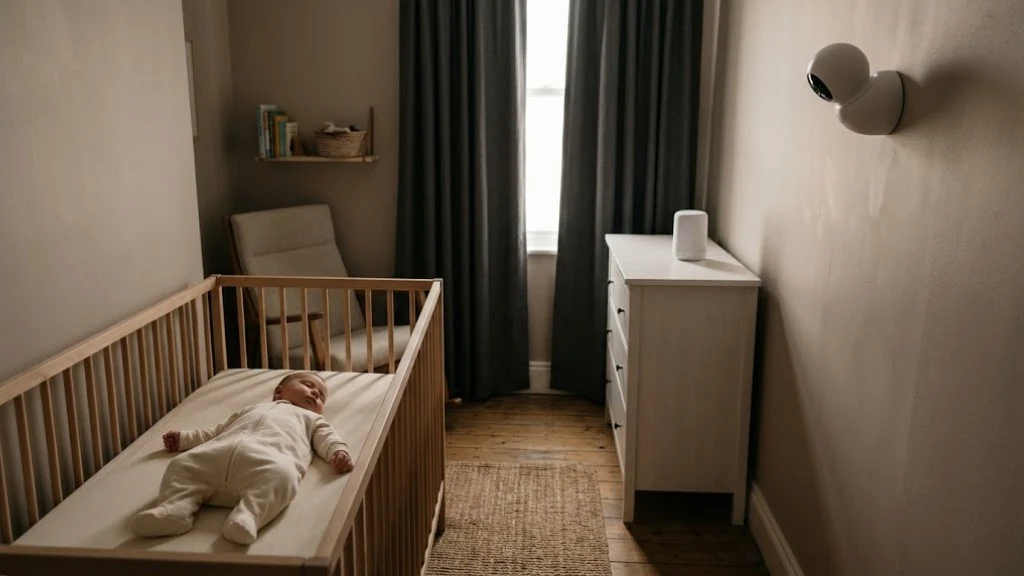
Before the first night, take some time to set up the room:
- A safe crib. Check that it meets current safety standards, the mattress fits snugly with no gaps, and the sheet is fitted.
- Darkness. Blackout curtains or shades help with early sunrises and naps.
- A comfortable temperature. Aim for a room that feels comfortable for a lightly dressed adult, and use a sleep sack rather than loose blankets.
- A monitor, if you’d like one. An audio or video monitor helps many parents feel confident. Mount cameras and route cords well out of your baby’s reach.
- Consistent sound. If your baby is used to white noise in your room, bring it along.
Anchor furniture like dressers and bookshelves to the wall, and keep cords from blinds, monitors and lamps far from the crib.
A Gentle Step-by-Step Transition

Some babies adjust overnight. Others need a little time. A gradual approach often helps:
1. Start with naps. Let your baby take a few days of naps in the new crib so the room becomes familiar in daylight. 2. Spend awake time there. Read books, change diapers and play in the nursery so it feels like a happy, normal place. 3. Keep the bedtime routine the same. Bath, pajamas, feed, book, song, sleep. Familiar steps tell your baby what’s coming, even in a new room. 4. Make the move for bedtime. Lay your baby down drowsy but awake if that’s what you normally do, and respond to them the way you usually would. 5. Give it a week or two. A few unsettled nights are normal. Stay consistent and calm.
Some parents find it easier to move the baby on a weekend or when both caregivers are home for a few nights.
Managing Your Own Feelings
It’s surprisingly common for parents to find the move harder than their baby does. You may feel anxious, miss the closeness, or wake up and check the monitor more than usual. That’s normal.
A few things help: remind yourself why you chose to make the change, check the monitor less often once you feel confident, and give yourself the same patience you’re giving your baby. If you’re struggling with constant worry that makes it hard to sleep even when your baby is fine, mention it to your doctor. Postpartum anxiety is common and treatable.
When to Pause and Try Again Later
If your baby is unwell, teething hard, or going through a big developmental leap, it’s okay to press pause. There’s no rule that says the transition has to happen on a particular date.
You can also go back to room-sharing temporarily during illness or travel. What matters is that your baby always has a safe place to sleep, wherever that place is.
Every family’s timeline is different. Whether your baby moves at six months or at a year, a safe crib and a calm routine are what help everyone sleep well.

Hi everyone, i’m Eddy from Africa-Mozambique. I’m Passionate about thing and that’s why i started this blog- to share what i discover. Hope you like and support this project.