
If you’ve spent the last few nights staring at the ceiling wondering why your two-week-old is wide awake at 3 a.m. and fast asleep at 3 p.m., you’re not doing anything wrong. Newborn sleep is genuinely strange, and almost nothing about it resembles the sleep you’re used to. Understanding what’s actually typical in these early weeks won’t make the exhaustion disappear, but it can take away some of the worry that makes it harder to bear.
Why newborn sleep looks so chaotic
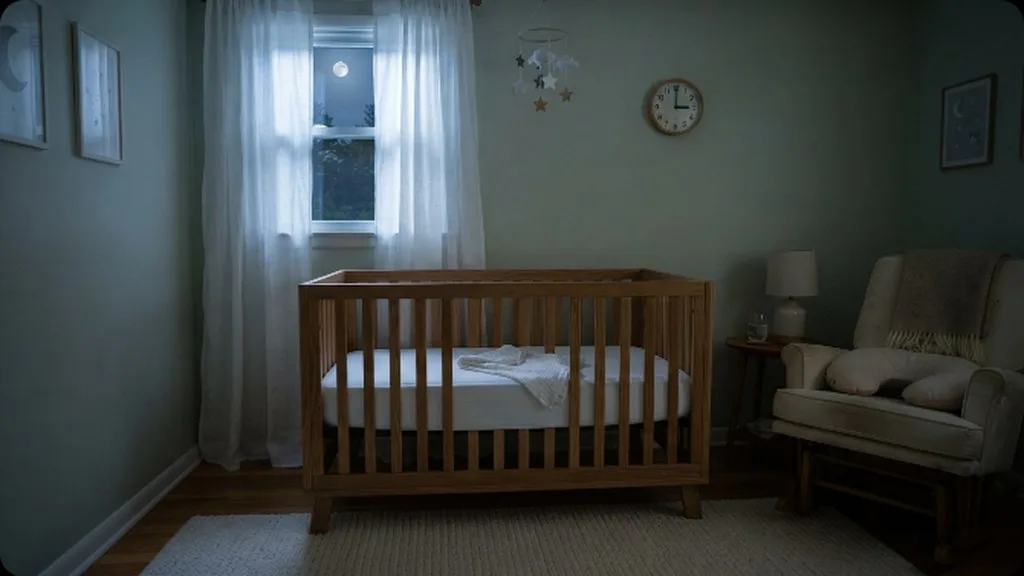
Most newborns sleep somewhere between 14 and 17 hours in a 24-hour period, but that number is misleading if you picture it as anything close to adult sleep. It’s broken into short stretches of one to three hours, scattered across day and night with no real pattern for the first several weeks. There’s a simple biological reason for this: babies aren’t born with a circadian rhythm. The internal clock that eventually tells us “it’s nighttime, produce melatonin and wind down” doesn’t really start functioning until somewhere around six to eight weeks, and it isn’t fully established until closer to three or four months.
Before that internal clock kicks in, your baby’s sleep is driven almost entirely by their stomach, not the sun. Newborns have tiny stomachs and digest breast milk or formula quickly, so they wake because they’re hungry, not because a schedule says it’s time. This is also why so many babies seem to have their days and nights flipped in the first couple of weeks â there’s no internal signal yet telling them which is which.
It can help to know that this isn’t a phase you need to fix. It resolves largely on its own as your baby’s brain matures, though there are gentle things you can do in the meantime to nudge things in the right direction, which we’ll get to.
What a “normal” 24 hours can look like
There’s a wide range of normal here, and it shifts fast in these early months.
In the first two weeks, expect frequent waking, often every one and a half to three hours, day and night, largely tied to feeding. Naps have no predictable length or timing.



By four to six weeks, many babies start to consolidate one longer stretch of sleep, often in the earlier part of the night, sometimes three to five hours. This isn’t “sleeping through the night” â it’s simply the first sign that longer stretches are becoming possible.
By eight to twelve weeks, day and night sleep usually starts separating more clearly. Total nighttime sleep (including wake-ups for feeding) tends to lengthen, and naps start to take a loose daytime shape.
It’s worth saying clearly: some babies hit these patterns earlier, some later, and both can be entirely normal. Premature babies, in particular, tend to follow this timeline based on their adjusted age (counted from their due date) rather than their birth date. If your baby was born early, judging them against a full-term timeline can create worry that isn’t warranted.
If it helps to picture it, a fairly typical day at three weeks old might look like: a feed and a short awake window around 7 a.m., a nap from 8 to 9:30, another feed, a nap from 11 to 12:30, and so on in loose ninety-minute-to-two-hour cycles straight through the day and into the evening, with no clear line between “daytime nap” and “nighttime sleep” yet. Some babies will string together a slightly longer stretch overnight by chance; others won’t, and that’s not a sign anything is wrong. Trying to hold this kind of schedule to a clock at this age usually causes more stress than it resolves â following your baby’s sleepy cues (rubbing eyes, yawning, staring off, fussing) tends to work better than watching the time.
The feeding-sleep connection
In the newborn stage, sleep and feeding are tightly linked, and that’s by design. Frequent night waking is normal and, for breastfed babies especially, often necessary â breast milk is digested quickly, and frequent feeding in the early weeks helps establish and protect milk supply. Formula-fed babies may occasionally stretch a bit longer between feeds since formula digests a little more slowly, but the difference in the first few weeks is usually smaller than people expect, and plenty of formula-fed newborns wake just as often.
Most pediatric guidance suggests not letting a newborn go longer than about four to five hours without feeding in the first few weeks, even overnight, until your pediatrician has confirmed steady weight gain. If your baby is a particularly sound sleeper and regularly sleeping through feeds in the first couple of weeks, it’s worth mentioning at a check-up rather than assuming it’s simply good luck.
Safe sleep: the part that matters most

However tired you are, safe sleep practices are worth holding onto consistently, because they meaningfully reduce the risk of Sudden Infant Death Syndrome (SIDS) and other sleep-related infant deaths. The American Academy of Pediatrics, the NHS, and equivalent health authorities in Canada and Australia are closely aligned on the core points:
Back to sleep, every time. Always place your baby on their back for every sleep, night and naps, until their first birthday. Once a baby can reliably roll both ways on their own, it’s fine if they roll into a different position, but they should still be placed on their back.
A firm, flat, bare sleep surface. A crib, bassinet, or Moses basket with a firm mattress and a fitted sheet â nothing else. No pillows, no loose blankets, no crib bumpers, no positioners or wedges, no plush toys. If you want your baby warm, a properly fitted sleep sack or wearable blanket is the safer option over loose bedding.
Room-sharing without bed-sharing. The AAP recommends room-sharing â baby sleeping in their own separate sleep space in your bedroom â for at least the first six months, ideally through the first year. The NHS gives the same six-month guidance. This is one of the more protective factors against SIDS that’s actually within your control.
Avoid overheating. Dress your baby in roughly one layer more than you’d wear yourself, and keep the room at a comfortable temperature rather than overly warm. Sweating, damp hair, or flushed cheeks are signs your baby may be too warm.
No smoke exposure, before or after birth, and avoiding alcohol or sedating medication for anyone who will be in bed near the baby.
Where recommendations genuinely differ slightly by country â for instance, some guidance on pacifier use at sleep time to reduce SIDS risk, or the exact preferred room temperature range â it’s worth checking your own country’s health authority (AAP/CDC in the US, NHS in the UK, the Canadian Paediatric Society, or the Red Nose organization in Australia) rather than assuming advice written for one country applies identically elsewhere.
What about swaddling and the startle reflex?

Newborns are born with a Moro, or startle, reflex â their arms fling outward suddenly, often waking them from a light sleep. Swaddling snugly (arms in, not too tight around the hips) can help some babies sleep more soundly by containing that reflex. If you swaddle, always place your baby on their back, and stop swaddling as soon as there are any signs your baby is starting to try to roll, usually somewhere between two and four months, since a swaddled baby who rolls onto their stomach can’t free their arms to reposition.
When contact naps and being held are the only thing that works
Plenty of newborns will only sleep well held upright against a caregiver’s chest, at least for some naps. This is common and not a habit you need to panic about breaking in the newborn stage. If you’re holding your baby while you sleep too, though, that’s a different situation â accidentally falling asleep in a chair or sofa with a baby is actually associated with higher SIDS risk than bed-sharing, so if you’re exhausted, it’s safer to put your baby down in their crib, even if they fuss for a few minutes, than to risk both of you drifting off together somewhere unplanned.
Is there anything you should actually be doing right now?
Not much, and that’s somewhat freeing. In these early weeks, the most useful things are usually:
Getting daylight exposure during the day and keeping things dim and quiet overnight, even though it won’t change much yet â it starts laying groundwork for the circadian rhythm that’s coming.
Responding to your baby’s cues rather than a clock. Newborns aren’t ready for sleep training or rigid schedules, and trying to force one before their biology is ready tends to create more frustration than progress.
Taking care of your own rest where you can, including accepting help, splitting night shifts with a partner if that’s an option, and not measuring your baby (or yourself) against other people’s stories of “easy” newborns.
Setting up a simple, low-effort sleep environment can also help, even at this stage. A room that’s dark for naps and nighttime, white noise at a safe volume (roughly the level of a running shower, not louder), and a consistent spot for sleep all help your baby start associating that environment with rest. None of this will produce a “trained” sleeper this early â that’s not the goal â but it lays a foundation that tends to make things easier once your baby’s biology catches up in a couple of months.
When it’s worth checking in with your pediatrician
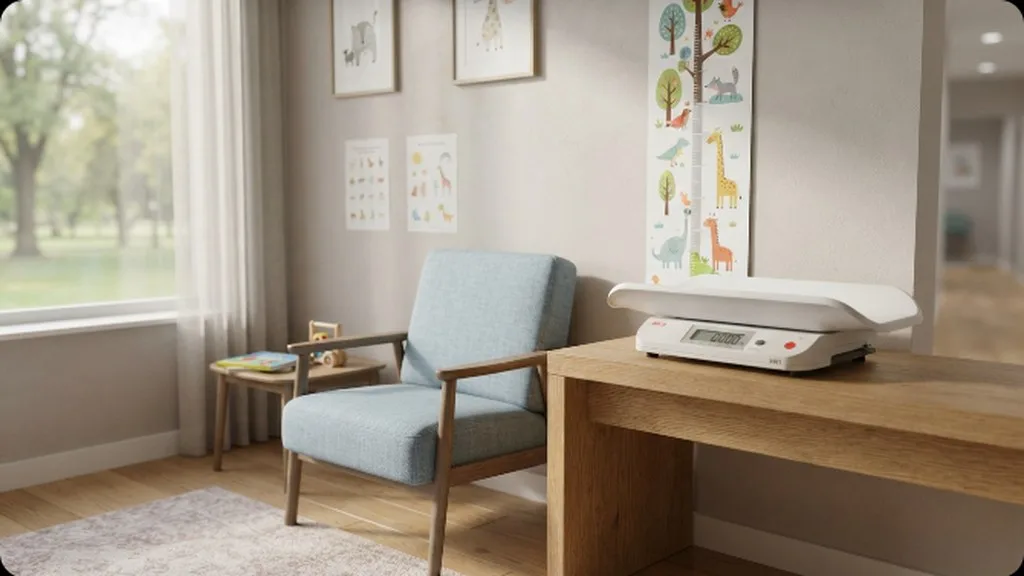
Most newborn sleep chaos is simply that â chaos, not a medical problem. But it’s worth mentioning to your pediatrician if your baby seems excessively difficult to wake for feeds, is sleeping through multiple feeds and not gaining weight well, makes noisy or labored breathing sounds during sleep, or if you notice unusual pauses in breathing. These are the exceptions rather than the rule, and most babies moving through this stage are simply doing exactly what newborns do.
FAQ
Is it normal for my newborn to sleep more during the day than at night?
Yes, in the first few weeks this is extremely common. It usually starts to even out by around six to eight weeks as the circadian rhythm begins to develop.
Should I wake my newborn to feed at night?
In the first few weeks, most pediatricians recommend not letting a newborn sleep more than four to five hours without feeding until weight gain is well established. After that, and once your pediatrician has given the go-ahead, you can generally let your baby sleep as long as they will.
Can I let my newborn nap in a swing or car seat?
For supervised, awake daytime naps, a swing or car seat for short periods is generally considered fine by many pediatricians, but it isn’t recommended for unsupervised sleep or overnight sleep, since these surfaces don’t meet the same flat, firm safe-sleep standards as a crib or bassinet.
The bottom line
Newborn sleep is fragmented, unpredictable, and biologically normal, even when it feels unmanageable at 4 a.m. It won’t stay this way â most babies start showing real patterns within two to three months. In the meantime, the two things worth focusing your energy on are keeping sleep safe and getting through the days however you can, without expecting your two-week-old to behave like a six-month-old just yet.

Hi everyone, i’m Eddy from Africa-Mozambique. I’m Passionate about thing and that’s why i started this blog- to share what i discover. Hope you like and support this project.